

Why Energy-Efficient Apartments Matter in Chicago
Energy-Efficient Apartments Chicago provide better comfort, healthier indoor air, and a reduced environmental impact. For those searching for sustainable living options in Chicago, here's what to know:
Top Ways to Find Energy-Efficient Apartments in Chicago:
- Look for ENERGY STAR certification - Buildings are at least 10-20% more efficient than code
- Check for LEED certification - Indicates comprehensive sustainable design
- Ask about all-electric appliances - Reduces fossil fuel reliance and improves air quality
- Inquire about smart technology - LED lighting, programmable thermostats, and high-efficiency HVAC systems
- Research neighborhood initiatives - Areas like the Medical District and Woodlawn lead in green development
Chicago's apartment market is experiencing a green revolution. Buildings designed to meet high-performance standards like Passive House prove that sustainability and comfort can coexist beautifully. Some properties have achieved significant energy performance improvements after comprehensive upgrades, showing the real-world impact of thoughtful design.
For urban professionals juggling career demands and personal wellness, these apartments deliver on multiple fronts. Residents can enjoy consistent temperatures year-round, fresh filtered air that reduces allergens, and the peace of mind that comes from living responsibly.
The benefits extend beyond the individual unit. Choosing an energy-efficient apartment supports Chicago's climate goals while offering modern features like EV charging stations, biophilic design elements, and smart home technology. These buildings are designed for modern lifestyles—with pet-friendly spaces, convenient amenities, and connections to vibrant neighborhoods.
Why Choose an Eco-Friendly Apartment in Chicago?
Choosing an eco-friendly apartment in Chicago is a decision that benefits both residents and the environment. Modern living can harmonize with nature, providing spaces that are not only comfortable but also contribute to a healthier planet.
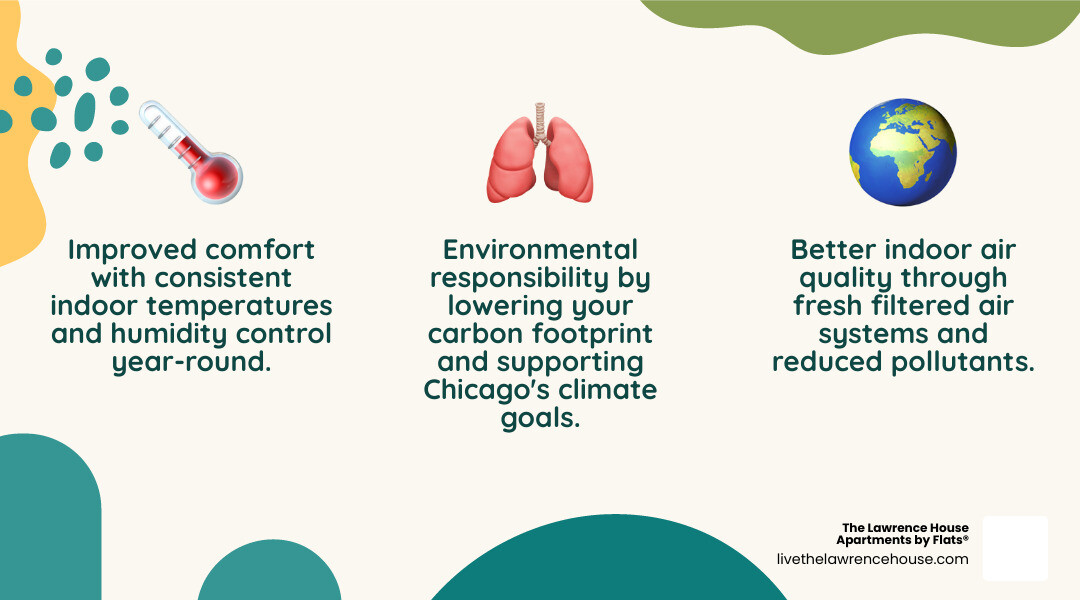
One of the most immediate benefits residents experience is improved comfort. Energy-Efficient Apartments Chicago are designed to maintain consistent indoor temperatures across every room, regardless of the season. This means no more chilly corners in winter or sweltering spots in summer. These apartments also excel at humidity control, ensuring a pleasant environment year-round. This superior thermal comfort is a hallmark of well-designed green buildings, making a home a sanctuary from Chicago's often unpredictable weather.
Beyond comfort, energy-efficient apartments offer significantly improved indoor air quality. They achieve this through fresh, filtered air systems that continuously circulate clean air throughout each unit. This process actively reduces indoor pollutants, including dust, pollen, and other allergens, creating a healthier living space. This constant supply of fresh air is a crucial component of a truly healthy living environment.
Finally, choosing an eco-friendly apartment is a powerful statement of environmental stewardship. These homes are designed to have a lower carbon footprint, reducing reliance on fossil fuels and contributing to a greener future. Opting for an energy-efficient apartment means directly participating in efforts to combat climate change, supporting sustainable urban development, and helping Chicago meet its environmental goals. It is a choice that can align a lifestyle with personal values.
Luxury apartments in Chicago, for example, are often designed with these principles in mind, offering a blend of high-end living and environmental responsibility.
Health and Wellness Benefits
The advantages of energy-efficient apartments extend deeply into health and wellness. Buildings that prioritize sustainability often incorporate thoughtful design elements that foster a stronger connection to nature, even in an urban setting. This is where biophilic design principles come into play. These can include elements like moss walls in common areas, natural wood accents throughout the building, and ample daylighting in corridors and units. These features blur the lines between indoor and outdoor environments, creating a calming and restorative atmosphere that can reduce stress and improve overall well-being.
Furthermore, many modern, sustainable apartment buildings are designed with Universal Design principles. This means that the spaces are intentionally crafted to be accessible and inclusive for people of diverse abilities, ensuring that residents can enjoy their home comfortably and independently. This commitment to inclusivity is another way these buildings contribute to a healthier, more supportive community. Health and sustainability are intertwined, impacting every aspect of apartment amenities in Chicago.
Long-Term Environmental Impact
The widespread adoption of Energy-Efficient Apartments Chicago has profound long-term environmental impacts. Collectively, these buildings significantly contribute to reduced greenhouse gas emissions. By lowering energy consumption for heating, cooling, and electricity, they decrease the demand for fossil fuels, which are major contributors to carbon emissions. This shift is crucial for mitigating climate change and protecting our planet.
This movement towards green buildings also plays a vital role in sustainable urban development. As more apartments are built or retrofitted to be energy-efficient, Chicago's urban landscape transforms into a more resilient and environmentally responsible city. This aligns directly with Chicago's climate goals, helping the city achieve its targets for carbon reduction and sustainable growth. The collective impact of residents choosing energy-efficient homes creates a ripple effect, fostering a greener, healthier urban environment for generations to come. This forward-thinking approach is evident in many modern apartments in Chicago.
Common Features in Energy-Efficient Apartments Chicago
Energy-Efficient Apartments Chicago refers to a suite of innovative features that work together to minimize energy consumption and maximize comfort. These are not just buzzwords; they are tangible elements that make a real difference in daily living.

Common energy-efficient features include:
- High-performance windows: These are often double or triple-paned with special coatings that prevent heat from escaping in winter and entering in summer. This significantly reduces the workload on heating and cooling systems.
- Advanced insulation: Walls, roofs, and floors are equipped with superior insulation materials that create a tight thermal envelope, minimizing heat transfer. This is a core principle in high-performance buildings.
- Airtight construction: Beyond insulation, meticulous sealing of all gaps and cracks prevents uncontrolled air leakage, which is a major source of energy waste. This ensures conditioned air stays inside and outside air stays out.
- All-electric appliances: Moving away from natural gas, fully electric appliances for cooking, heating, and water heating reduce reliance on fossil fuels. This lowers carbon emissions and improves indoor air quality by eliminating combustion byproducts.
- EV charging stations: As electric vehicles become more common, many green apartment buildings are providing convenient electric vehicle charging stations, supporting sustainable transportation options for residents.
These features contribute to creating high-end Chicago apartments that are not only luxurious but also environmentally conscious.
Smart Technology and Appliances
Smart technology and energy-efficient appliances are at the heart of modern green living. ENERGY STAR®-rated appliances are often found in these apartments. These appliances are independently certified to use 15% less energy than standard models. From refrigerators to dishwashers and washing machines, ENERGY STAR appliances are a standard in efficiency.
Lighting is another area where smart choices make a big impact. LED lighting systems are ubiquitous in energy-efficient apartments, both in individual units and common areas. These bulbs use significantly less energy compared to traditional incandescent bulbs and last an impressive 25 times longer, reducing maintenance and replacement needs.
Furthermore, smart thermostats and programmable controls allow residents to precisely manage their heating and cooling, optimizing energy use without sacrificing comfort. These intelligent systems can learn preferences, adjust to occupancy, and even be controlled remotely, putting energy management directly into the hands of the resident. These smart features are part of what makes Chicago apartments with the best amenities so appealing.
Sustainable Building-Wide Systems
Beyond individual apartment features, sustainable building-wide systems are crucial for truly energy-efficient complexes. High-efficiency HVAC (Heating, Ventilation, and Air Conditioning) systems are fundamental. These advanced systems use less energy to heat and cool the entire building, ensuring comfortable temperatures while minimizing environmental impact.
A particularly effective system is mechanical ventilation with heat recovery (HRV/ERV). This technology works by recovering heat from outgoing stale air and using it to pre-condition incoming fresh air. This process maintains excellent indoor air quality without significant energy loss, a key principle of ultra-low energy buildings.
Some buildings take sustainability a step further by incorporating solar thermal hot water systems. For instance, some retrofitted apartment buildings in Chicago have installed large solar-thermal hot water systems with numerous solar panels, using renewable energy to meet a portion of the building's hot water needs.
Finally, some communities offer convenient services like composting, allowing residents to easily divert food waste from landfills, further reducing the building's overall environmental footprint. These comprehensive systems make for full amenity apartments in Chicago that are truly green.
Decoding Green Building Certifications
When exploring Energy-Efficient Apartments Chicago, understanding green building certifications is key. These certifications are not just decorative plaques; they represent rigorous third-party verification that a building meets specific performance standards for environmental sustainability and energy efficiency. They provide assurance that a property has been designed, constructed, and operates with a commitment to reducing its ecological impact.

These certifications help identify properties that go beyond basic building codes, offering superior environmental performance and resident comfort. For luxury living in Chicago apartments, these certifications often signify a higher standard of quality and sustainability.
ENERGY STAR and LEED
Two of the most recognized certifications in the United States are ENERGY STAR and LEED.
ENERGY STAR for multifamily housing signifies that an apartment building is designed and verified to be significantly more energy efficient than conventionally built properties. Homes and apartments that earn the ENERGY STAR label are at least 10% more energy efficient than homes built to code and achieve a 20% improvement on average. ENERGY STAR certified apartments also focus on delivering comfort by maintaining consistent temperatures and controlling humidity, along with providing fresh, filtered air that reduces indoor pollutants. More information is available about certified apartments and condos and their benefits.
LEED (Leadership in Energy and Environmental Design) certification, managed by the U.S. Green Building Council, is a comprehensive rating system that addresses sustainability across various aspects of a building's design, construction, operation, and maintenance. LEED certification has different levels—Certified, Silver, Gold, and Platinum—reflecting increasing levels of environmental performance. LEED-certified buildings focus on holistic sustainability, including water efficiency, materials and resources, indoor environmental quality, and sustainable site development, in addition to energy performance.
High-Performance Building Standards
Beyond ENERGY STAR and LEED, some buildings adhere to even more stringent high-performance building standards, such as the Passive House Institute of the United States (PHIUS) standard. Passive House buildings are designed for ultra-low energy consumption.
The PHIUS standard emphasizes five core principles:
- No thermal bridging: Eliminating pathways for heat to escape or enter the building through structural elements.
- Superior windows: Utilizing high-performance windows that are extremely energy-efficient.
- Mechanical ventilation with heat recovery: Ensuring a constant supply of fresh air while recovering energy from exhaust air.
- Quality insulation: Continuous and robust insulation around the entire building envelope.
- Airtight construction: Achieving an exceptionally airtight building shell to prevent energy loss.
These rigorous standards result in buildings with superior comfort, stable indoor temperatures, and exceptional indoor air quality. For example, a large multi-family building in Chicago has met the PHIUS standard, demonstrating that these advanced principles are achievable on a large scale. This commitment to cutting-edge sustainability is part of the vision for sustainable living at The Lawrence House.
Chicago's Initiatives for Greener Apartment Buildings
Chicago is actively promoting energy efficiency in its building sector through a combination of local government programs and utility partnerships. These initiatives are crucial for fostering community development. There is a concerted effort to support both new construction and the retrofitting of existing properties to meet higher energy performance standards. This push for sustainability is helping to shape the landscape of Uptown apartments in Chicago, IL.
Local Programs and Utility Offerings
Chicago offers several valuable programs designed to help apartment building owners implement energy-efficient upgrades, which ultimately benefits residents.
The Retrofit Chicago Residential Partnership provides a streamlined, "one-stop shop" for building owners seeking energy efficiency solutions. By contacting them, building owners can learn about various programs and request an energy assessment. This program helps owners identify and implement effective upgrades. Building owners can explore the Retrofit Chicago Residential Partnership Application.
Local utilities like ComEd and Peoples Gas are also significant partners in this endeavor. They collaborate to offer comprehensive multi-family energy efficiency programs. These programs provide technical support and guidance for a wide range of improvements. Through these offerings, building owners can access resources for upgrades such as weatherization, high-efficiency HVAC systems, LED lighting, and smart thermostats. The Multi-Family Energy Savings program outlines how property owners can improve energy performance.
These energy assessments are a cornerstone of these programs. They involve a visual inspection of the property to identify areas of energy waste in common areas and tenant spaces, leading to personalized reports with recommended upgrades. This proactive approach helps building owners make informed decisions that reduce energy consumption.
The Future of Energy-Efficient Apartments in Chicago
The future of Energy-Efficient Apartments Chicago is bright, driven by both the necessity of climate action and the opportunities presented by innovative building practices.
Retrofitting existing buildings for energy efficiency presents both challenges and significant opportunities. Chicago has a vast stock of older buildings, and upgrading them requires careful planning and investment. However, programs like Retrofit Chicago demonstrate that these challenges can be overcome. The success of retrofitted buildings, which have achieved significant improvements in energy performance after upgrades, serves as a powerful example of what's possible. Retrofits not only reduce energy consumption but also improve resident comfort and property value.
New construction standards are also pushing the envelope. New developments are being built as "all green rental communities," designed to meet and exceed energy efficiency and decarbonization standards from the ground up. These new buildings often incorporate fully electric appliances, EV charging stations, and superior insulation to minimize their environmental impact. The existence of a large multi-family building meeting the Passive House standard in Chicago showcases how new developments can achieve extremely high levels of energy performance.
Certain neighborhoods in Chicago are leading the way in energy-efficient apartment development. The Medical District, with new green construction, and areas like Woodlawn, where projects have undergone extensive energy-efficient retrofits, are becoming hubs for sustainable living. These areas demonstrate a commitment to integrating environmental responsibility into urban development.
Your Guide to Finding a Sustainable Apartment
Finding an apartment that aligns with personal values for sustainability and energy efficiency can be an exciting journey. Exploring the options available in Energy-Efficient Apartments Chicago requires a systematic approach that includes thorough research and insightful questions during apartment tours. Floorplans can provide a glimpse into modern living spaces, and understanding their efficiency is part of the process.
What to Look For in Energy-Efficient Apartments in Chicago
When looking for energy-efficient apartments, there are several key indicators and features to pay close attention to:
- Check for certifications: Always look for recognized green building certifications like ENERGY STAR, LEED, or Passive House. These labels are third-party verifications that the building meets specific energy performance standards.
- Ask about specific features: Inquire about the presence of all-electric appliances, high-performance windows, advanced insulation, and LED lighting in both units and common areas. These are fundamental components of an energy-efficient home.
- Inquire about utility data: Asking about the building's overall energy consumption can provide insights into its efficiency.
- Observe window quality: During a tour, pay attention to the windows. High-performance windows often have multiple panes and may feel thicker or have a visible coating. They are crucial for maintaining indoor temperatures.
For additional insights and answers to common questions about living in the Uptown Chicago community, the FAQs about The Lawrence House in Uptown Chicago can be a helpful resource.
Questions to Ask During Your Tour
An apartment tour is an opportunity to gather crucial information. Consider asking the following questions to gauge a property's commitment to energy efficiency:
- What green certifications does the building have? This is a primary indicator of verified energy performance (e.g., ENERGY STAR, LEED, Passive House).
- Are the appliances ENERGY STAR rated? ENERGY STAR-rated appliances use 15% less energy, impacting overall energy consumption.
- What type of lighting is used in units and common areas? LED bulbs use significantly less energy and last significantly longer than traditional bulbs.
- Does the building have EV charging stations? This indicates a forward-thinking approach to sustainable transportation.
- Are there any features that improve indoor air quality? Look for fresh filtered air systems, low VOC (volatile organic compound) paints, or mechanical ventilation with heat recovery.
Asking these questions can provide a clear understanding of the apartment's energy-efficient features and its overall commitment to sustainability. The amenities are designed with resident comfort and a greener future in mind.
Conclusion
As explored in this guide, Energy-Efficient Apartments Chicago offer a multitude of benefits, changing the way people live in the city. From the immediate advantages of improved comfort and healthier indoor air quality to the long-term positive environmental impacts, choosing a green apartment is a choice for a better lifestyle and a better planet. Certifications like ENERGY STAR, LEED, and Passive House guide the development of these sustainable homes, and local programs and utility offerings support their widespread adoption across Chicago.
The growing trend of green living is more than just a passing fad; it's a fundamental shift towards conscious urban development that positively impacts well-being and the environment. By understanding the common features, certifications, and local initiatives, prospective renters are better equipped to find a sustainable apartment that meets their needs.
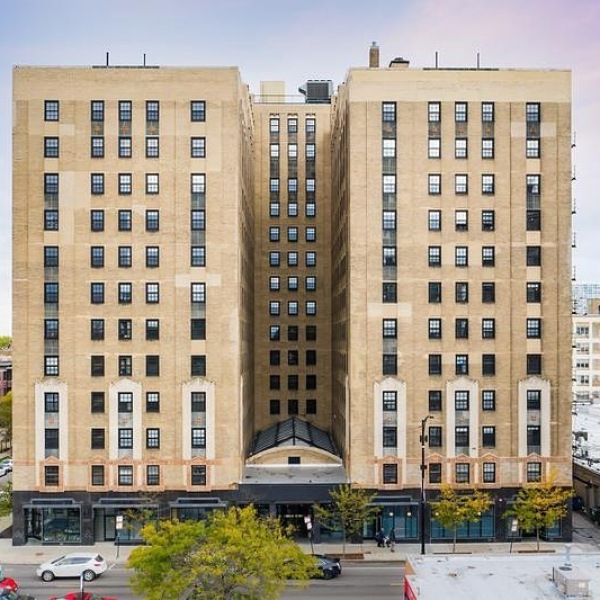
Find modern living in the Lawrence House Apartments Chicago, which blends historic charm with contemporary comforts and a commitment to a greener future.