

What Makes an Exclusive Coffee Bar Chicago-Worthy?
Looking for the best exclusive coffee bar in Chicago right now? Here's a quick look at the top spots worth seeking out:
- Café Integral – Hyper-focused sourcing, Nicaraguan single-origin beans, intimate setting
- Sawada Coffee – West Loop gem with precise craft and a design-forward space
- Metric Coffee – Ukrainian Village roaster with rotating single-origin lots and iconic Chicago packaging
- Gaslight Coffee Roasters – Logan Square staple with in-house roasting and a full seasonal kitchen
- Buttercup – SoLo café by day, amaro cocktail bar by night with a curated evening program
- Candor Coffee – Owner-operated Wicker Park shop with multi-roaster pour-overs and standout hospitality
- Metropolis Coffee (Edgewater) – Award-winning roaster with a flagship café and deep community roots
- Necessary & Sufficient Coffee – Artist-led café concept built around craft, connection, and seasonal menus
- Ipsento 606 – Bucktown café and bar along the 606 trail, serving coffee by day and cocktails by night
Chicago has earned its place among America's great coffee cities. The specialty coffee scene here goes well beyond grab-and-go lattes. Certain bars stand apart — not just because the coffee is excellent, but because every detail of the experience has been thought through.
The difference between a standard café and a truly exclusive coffee bar is real. It shows up in how beans are sourced, how baristas are trained, how the space feels, and even what cup your drink arrives in.
Chicago's exclusive coffee scene has also grown and matured in the years following the pandemic. Independent bars have doubled down on quality, craft, and identity. New hybrid concepts — spaces that shift from espresso service in the morning to cocktails at night — have pushed the definition of what a coffee bar can be.
Whether you're new to the city or a longtime resident exploring Uptown and beyond, there's a lot to discover.
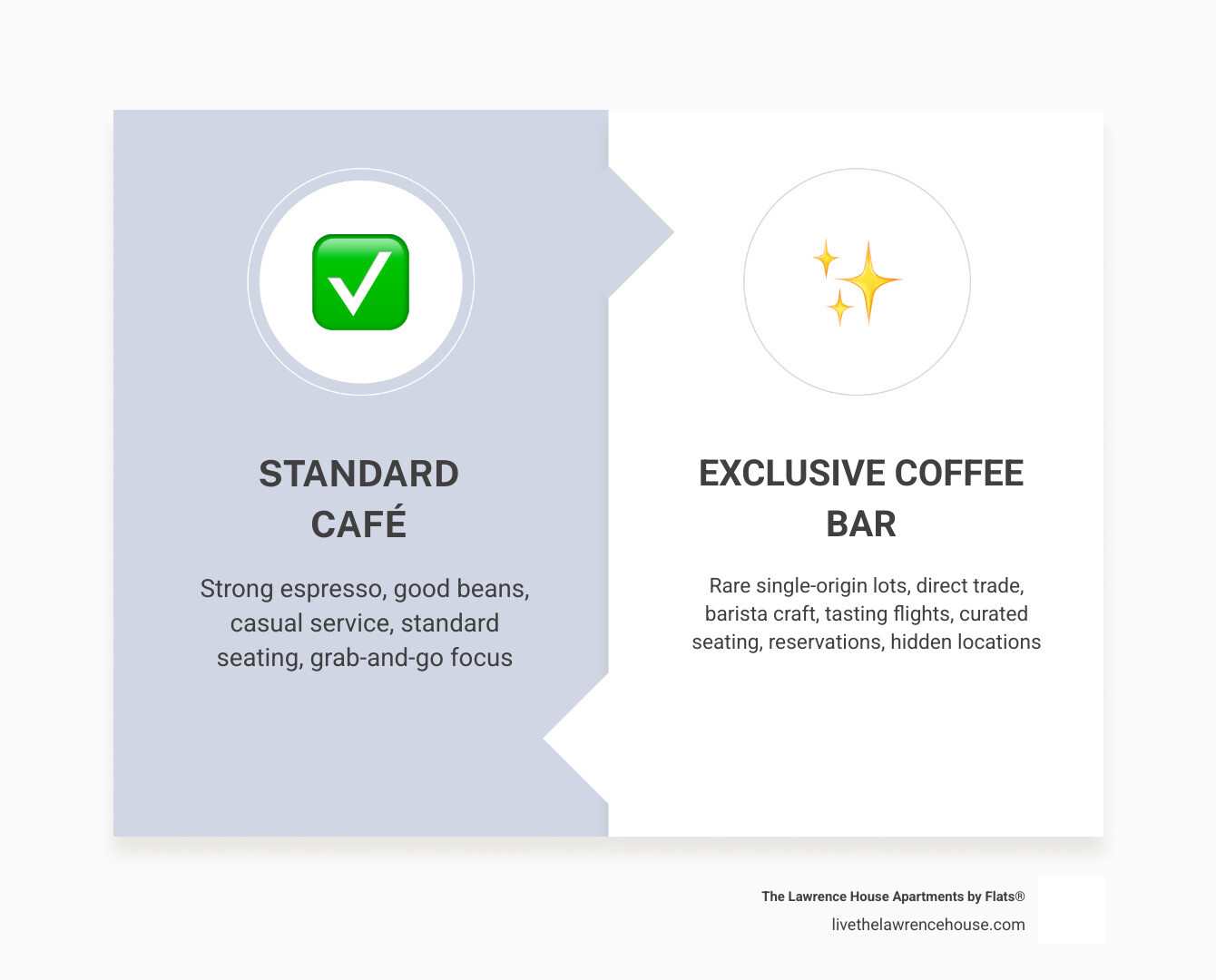
How an exclusive coffee bar Chicago spot differs from a standard specialty café
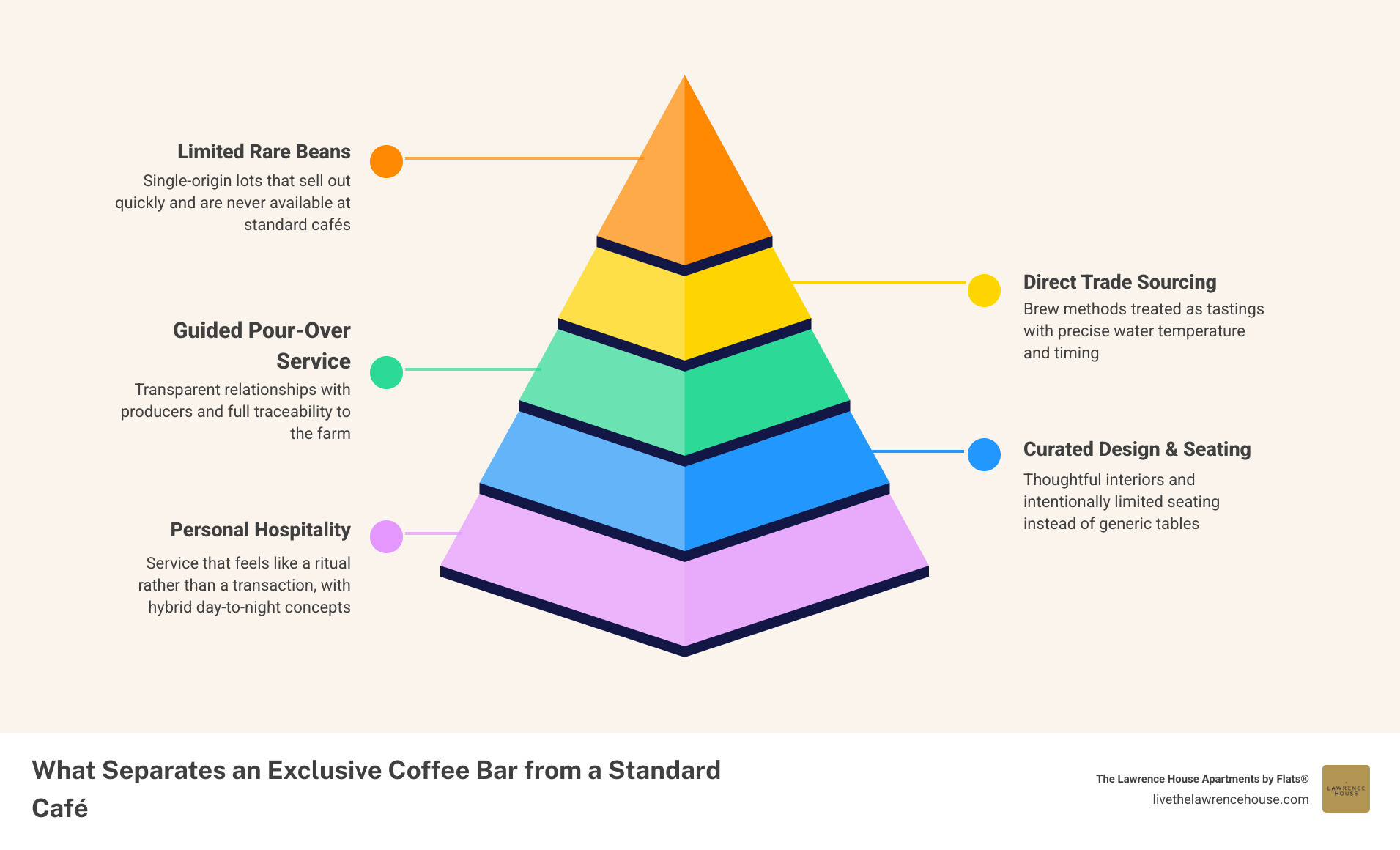
A standard specialty café may already serve strong espresso and well-roasted beans. An exclusive coffee bar Chicago destination takes that baseline and adds intention at every step.
Common differences include:
- Limited or rare single-origin lots
- Direct relationships with producers or highly transparent sourcing
- Pour-over service that feels more like a guided tasting
- Small, focused menus rather than giant everything-for-everyone boards
- More design-driven interiors and curated seating
- Hospitality that feels personal, not transactional
- Hybrid concepts that become cocktail bars or lounge spaces later in the day
In other words, exclusivity here is not about velvet ropes. It is about precision, restraint, and atmosphere. The best places feel edited, not crowded with options.
The hallmarks visitors should look for before choosing an exclusive coffee bar Chicago destination
A few signs usually point to a higher-end coffee experience:
- House roasting or an intentional multi-roaster program
- Rotating seasonal drinks instead of permanent novelty overload
- Ceramic service for dine-in drinks
- Manual brew options like V60 or other pour-over methods
- Signature drinks that still let the coffee shine
- Architectural character or thoughtful interior design
- A neighborhood setting that adds to the ritual
Chicago also has strong coffee clusters, especially around Milwaukee Avenue, Logan Square, Wicker Park, Bucktown, and parts of The Loop. That concentration helps bars develop a sharper identity. Competition is stiff, and your cortado knows it.

Best Exclusive Coffee Bars in Chicago by Neighborhood and Experience
Chicago has well over 20 notable specialty coffee shops and roasters mentioned across major guides, with especially dense pockets in Logan Square, Wicker Park, The Loop, and nearby neighborhoods. Some of the city’s bigger names have multiple locations, but the most memorable premium experiences often come from places that feel rooted in one block, one room, and one very specific point of view.
Standout bars for design, brewing, and hospitality
A few coffee bars consistently stand out for their full-package experience.
Necessary & Sufficient Coffee brings an artist-led approach to specialty coffee with seasonal menus and a community-centered feel. It is a strong example of how premium coffee in Chicago increasingly overlaps with design, creative identity, and all-day hospitality.
Candor Coffee in Wicker Park is another standout because of its multi-roaster espresso and pour-over focus. That model gives guests more variety and often more nuance than a single-roaster shop. It also pairs well with a smaller, more attentive service style.
Ipsento 606 in Bucktown remains notable because it blends polished café service with a day-to-night bar identity. That crossover format has become one of the clearest signs of modern premium coffee culture in Chicago.
Metropolis in Edgewater stands out for a different reason: a flagship café tied to long-established roasting credibility. That combination of local roasting strength and neighborhood energy creates a premium feel without making the room feel stiff.
Hidden and lesser-known spots that deserve more attention
Not every memorable coffee bar in Chicago is a headline-maker.
Metropolis Edgewater Café is often discussed for its roasting reputation, but its café experience deserves equal attention. Edgewater is not always the first stop on a visitor’s coffee crawl, which is exactly why it can feel like a great find.
Semaphore Cafe is a newer premium-facing name worth watching. While its public information is still light, its positioning around elevated coffee experiences signals the kind of newcomer that helps keep Chicago’s coffee scene moving.
Candor on Division Street also fits this category for many visitors. Wicker Park is famous, but smaller owner-led shops can still slip past people who default to the most recognizable names.
For broader trip planning, these outside guides are useful:
- Nine Specialty Coffee Shops To Visit in Chicago
- Chicago | Brian's Coffee Spot
- Where to Find the Best Coffee in Chicago, IL
Coffee bars that blur the line between café, cocktail bar, and cultural space
One of the biggest post-2020 shifts in Chicago coffee is the rise of spaces that do more than one thing well.
Buttercup is a clear example. By day, it operates as a café with espresso and matcha; later, it shifts into an amaro-focused cocktail bar. That kind of transition creates a more layered experience than a standard coffee shop run.
Ipsento 606 has long stood out for a similar dual identity. Visitors can stop in for coffee, food, or later-evening drinks, making it one of the city’s better examples of how hospitality has expanded beyond the morning rush.
These spaces often feel more lounge-like, more curated, and more memorable for visitors who want a coffee stop that can anchor part of an evening out too.
How Chicago’s premium coffee bars compare with bigger multi-location names
Chicago also has major multi-location coffee brands. Research points to large local footprints from Intelligentsia, Dark Matter, Big Shoulders, Dollop, Colectivo, Fairgrounds, and La Colombe. Those brands matter because they helped shape the city’s coffee expectations and made specialty coffee more visible.
Still, smaller premium bars usually have a different edge.
Comparison points include:
- More intimate service
- Narrower and often more carefully chosen bean lists
- Greater flexibility with seasonal drinks
- Stronger neighborhood identity
- Less standardized design
- More willingness to experiment with day-to-night formats
- More tactile presentation, from ceramics to bar-style service
That does not make larger names bad. It just means the most exclusive experiences tend to come from places where the room, the menu, and the coffee program are all tightly aligned.
| Area | Best known for | Experience style |
|---|---|---|
| Logan Square | Roasters and creative cafés | Casual but serious coffee culture |
| Wicker Park | Design and hospitality | Polished neighborhood coffee bars |
| Bucktown | Trail-adjacent café bars | Day-to-night crossover spaces |
| West Loop | Trend-forward concepts | Stylish destination stops |
| The Loop | Convenient specialty access | Fast-paced but quality-focused |
| Edgewater | Community-rooted flagships | Local feel with strong roasting credibility |
How to Plan the Best Premium Coffee Crawl in Chicago
A great coffee crawl is less about squeezing in the most stops and more about building contrast: one espresso-focused bar, one pour-over destination, one hybrid café-bar, and one neighborhood favorite.

What to expect from sourcing, roasting, menu style, and overall experience
Chicago’s better coffee bars usually separate themselves through sourcing and roasting style.
You may find:
- Direct-trade or highly transparent origin information
- Single-origin offerings from places like Ethiopia or Nicaragua
- In-house roasting on a set cadence
- Multi-roaster menus that rotate with the season
- Espresso tonics, seasonal mocktails, and thoughtful non-coffee options
- Pastries and food that feel curated rather than generic
Some bars focus tightly on one producing region, while others build a broader tasting menu through rotating lots. Both approaches can feel premium. What matters is clarity. If a café knows exactly what it wants to be, guests can feel it.
Smart tips for visitors seeking the most memorable exclusive coffee experiences
A few planning tips can make the experience much better:
- Go early for the widest pastry and seating selection
- Visit on weekdays if you want more barista interaction
- Try both batch brew and pour-over when offered
- Check hours before heading out, especially for hybrid spaces
- Build your route around Milwaukee Avenue corridors and adjacent neighborhoods
- Limit yourself to smaller drinks at each stop unless you enjoy vibrating through the sidewalk
For readers planning a broader café itinerary, these guides can help:
- More info about Local Coffee Shops Near Me
- More info about Ultimate Cute Coffee Shops Guide Downtown Chicago
Where to keep exploring after your coffee crawl
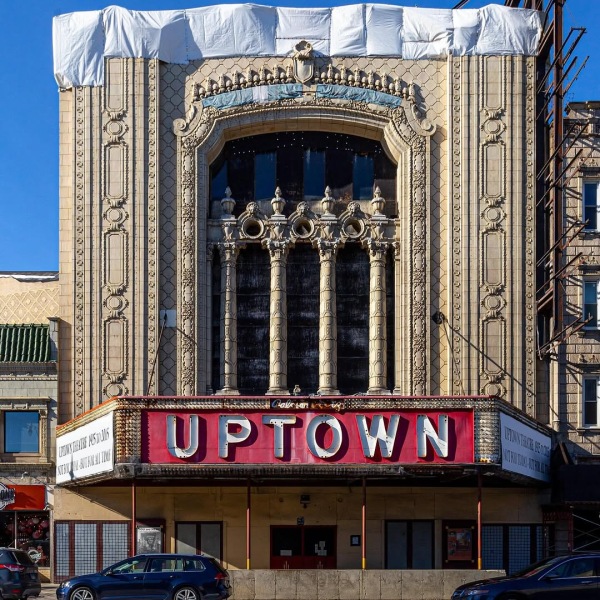
After visiting coffee bars in Wicker Park, Bucktown, Logan Square, or The Loop, Uptown is a smart next chapter. It offers access to great local cafés while giving a different pace than the busiest coffee corridors.
For more neighborhood-specific ideas, keep exploring:
- More info about Best Coffee Shops in Uptown
- Coffee Shop Near Uptown Mall
- Ultimate Cute Coffee Shops Chicago Guide
- Cute Coffee Shops in Chicago
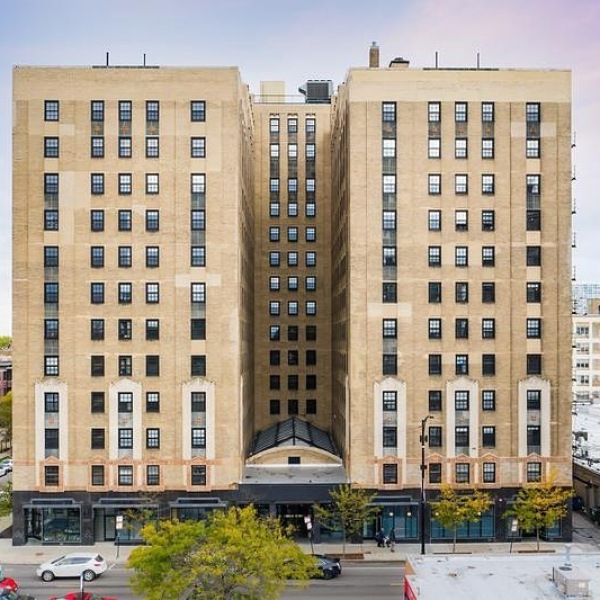
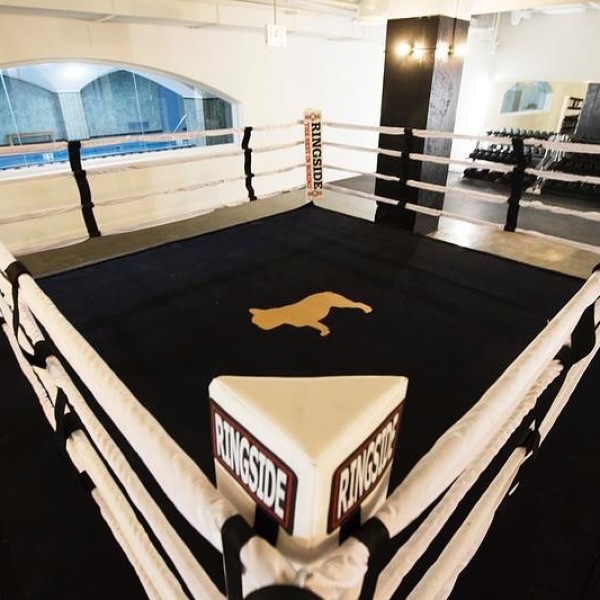
For anyone building a lifestyle around Chicago neighborhood discovery, The Lawrence House Apartments by Flats® places residents in Uptown with easy access to coffee-rich parts of the city, plus a rooftop lounge, fitness center, pet-friendly living, and restored historic character with modern conveniences. It is a fitting home base for anyone whose weekend plans regularly begin with "just one coffee" and somehow become four.