

The Benefits and Features of Modern Indoor Swimming Pools
Finding local indoor swimming pools is the best way to enjoy swimming, aquatic fitness, and relaxation year-round, regardless of the unpredictable weather outside.
To find the best indoor swimming options near you quickly, use this simple checklist:
- Check Local Parks & Rec: Municipal park districts often run public indoor facilities with daily passes.
- Look at Fitness Clubs: Many local athletic centers and community clubs feature lap pools.
- Explore Luxury Apartments: Modern residential buildings in major cities often feature private, indoor aquatic amenities for residents.
- Verify the Schedule: Indoor pools often split hours between open swim, lap swim, and private lessons.
As of July 2026, more people than ever are moving their workouts indoors. Extreme summer heat waves, unexpected storms, and poor air quality alerts can ruin outdoor plans instantly.
Indoor facilities solve this problem. They offer a highly controlled environment with consistent water temperatures, clean air, and zero UV exposure.
Whether you are an urban professional looking to swim laps after a busy workday, or you simply want a quiet place to unwind, indoor water facilities provide a reliable escape.
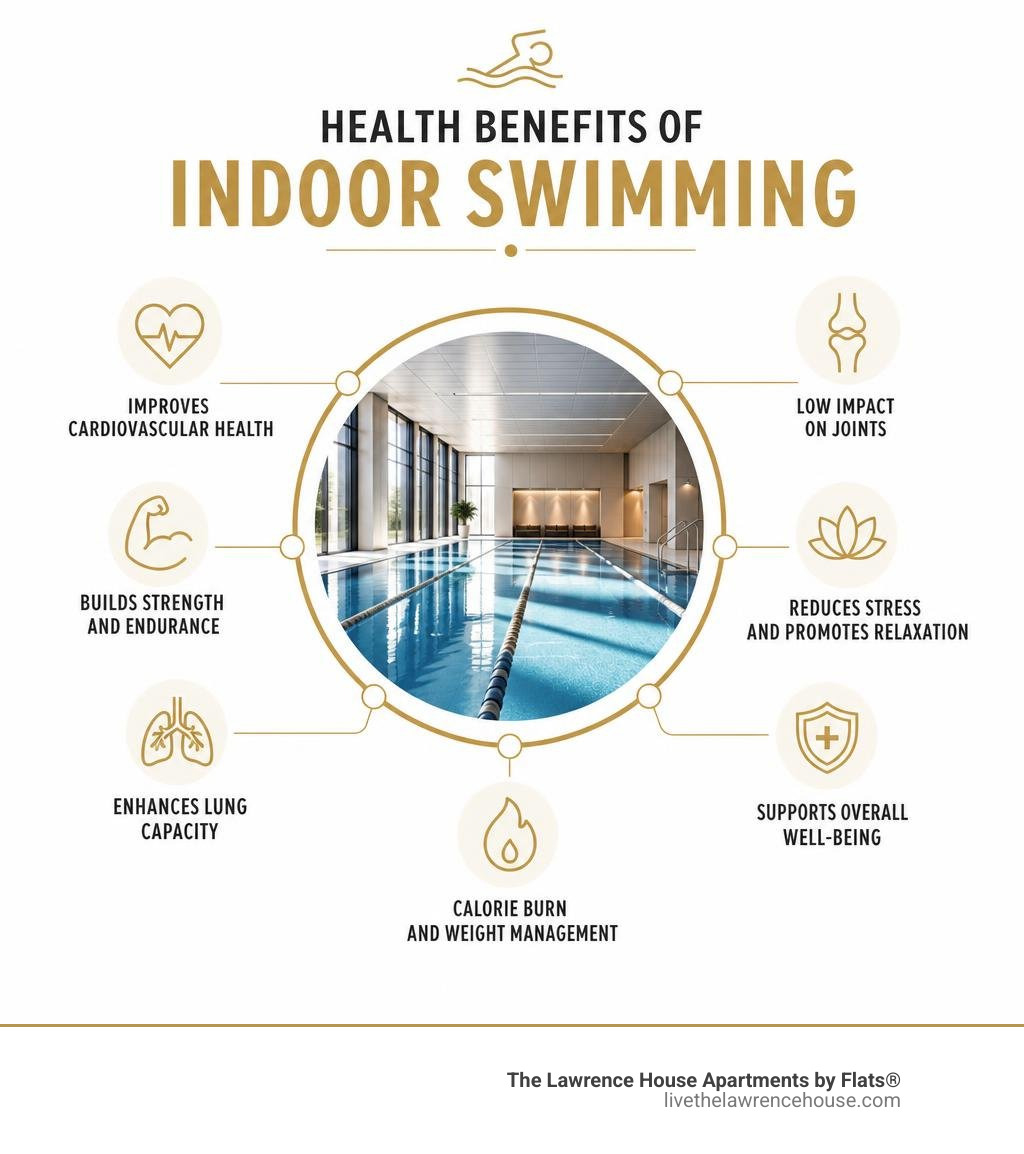
Below is a quick look at how swimming indoors supports your daily wellness routine.
A true indoor aquatic facility, often referred to as a natatorium, is far more than just a pool with a roof. It is a highly engineered environment designed to provide a comfortable, healthy, and consistent swimming experience.
To maintain high air quality and prevent structural damage, modern indoor facilities utilize advanced environmental control systems. These systems manage:
- Humidity Control: Specialized commercial dehumidifiers extract moisture from the air to prevent a muggy, uncomfortable atmosphere.
- Ventilation: High-efficiency HVAC systems continuously cycle fresh air into the facility, preventing the buildup of chloramines (the chemical byproducts that cause the strong chlorine smell).
- Water Quality and Temperature: Advanced filtration systems keep the water crystal clear, while dedicated heating systems maintain a stable temperature, typically between 80°F and 84°F for recreational swimming.
Key Differences: Indoor Swimming Pools vs. Outdoor Pools
Deciding between indoor and outdoor swimming depends on personal preferences, but indoor pools offer distinct structural advantages.
| Feature | Indoor Swimming Pools | Outdoor Pools |
|---|---|---|
| Weather Protection | 100% protected; never closed due to rain, wind, or low temperatures. | Vulnerable to weather; closed during winter and storms. |
| UV Exposure | Zero risk of sunburn or long-term UV skin damage. | High UV exposure; requires constant sunscreen application. |
| Air Quality | Controlled indoor air filtration. | Subject to outdoor allergens, wildfire smoke, and air quality alerts. |
| Seasonal Closures | Open year-round. | Typically open only from late June through early September. |
Types of Indoor Swimming Pools and Aquatic Amenities
Indoor aquatic centers are designed to serve different purposes, from high-intensity training to therapeutic recovery. The most common pool types include:
- Lap Pools: Typically 25 yards or 50 meters long, these pools feature dedicated lanes with floating markers. They are kept at slightly cooler temperatures (around 78°F to 82°F) to prevent lap swimmers from overheating during intense workouts. For those looking to master their stroke or build endurance, exploring options for Chicago lap swimming is an excellent starting point.
- Leisure Pools: These pools are warmer and designed for recreation. They often feature play structures, water slides, lazy rivers, and splash pads for younger visitors.
- Therapy Pools: Kept at warmer temperatures (often 90°F or higher), therapy pools are used for low-impact rehabilitation, physical therapy, and joint pain relief.
- Saunas and Hot Tubs: Many premier facilities, such as the Frisco Indoor Aquatic Center, complement their pools with dry saunas and hot tubs to promote muscle relaxation and recovery.
- Zero-Depth Entry: Also known as beach-style entry, this design features a gradual slope into the water, eliminating the need for stairs or ladders and providing easy access.
Essential Rules, Etiquette, and Safety for Indoor Pools
To ensure a clean, safe, and respectful environment, indoor pools enforce strict operational rules. Following these guidelines helps maintain water quality and ensures everyone enjoys their swim.
- Proper Swimwear: Swimmers must wear appropriate swim attire made of synthetic materials like nylon or lycra. Street clothes, especially cotton, are strictly prohibited. Cotton fibers break down in chlorinated water, clog filtration systems, absorb pool chemicals, and bleed dyes that cloud the water.
- Showering: Taking a cleansing shower before entering the pool is required. This removes body oils, perfumes, and sweat, which directly improves water hygiene and reduces the formation of irritating chloramines.
- Circle Swimming: When a lap lane is shared by three or more swimmers, circle swimming is mandatory. Swimmers move in a counterclockwise direction, staying on the right side of the lane and passing mindfully in the center when necessary.
- Child Supervision: Safety guidelines require close supervision of young children. Typically, children under a certain age or height must remain within arm's reach of a supervising adult in the water at all times.
- Lightning Safety: A common misconception is that indoor pools are safe during storms. However, because water pipes and electrical systems can conduct lightning strikes, many facilities require all swimmers to exit the water immediately if thunder or lightning occurs, remaining out of the pool until 30 minutes after the last sound of thunder.
For a detailed breakdown of community pool expectations, swimmers can review the Mack Indoor Pool rules.
How to Find and Choose the Best Indoor Pools Near You
When searching for the perfect indoor pool, several practical factors should be considered to ensure the facility fits your lifestyle.
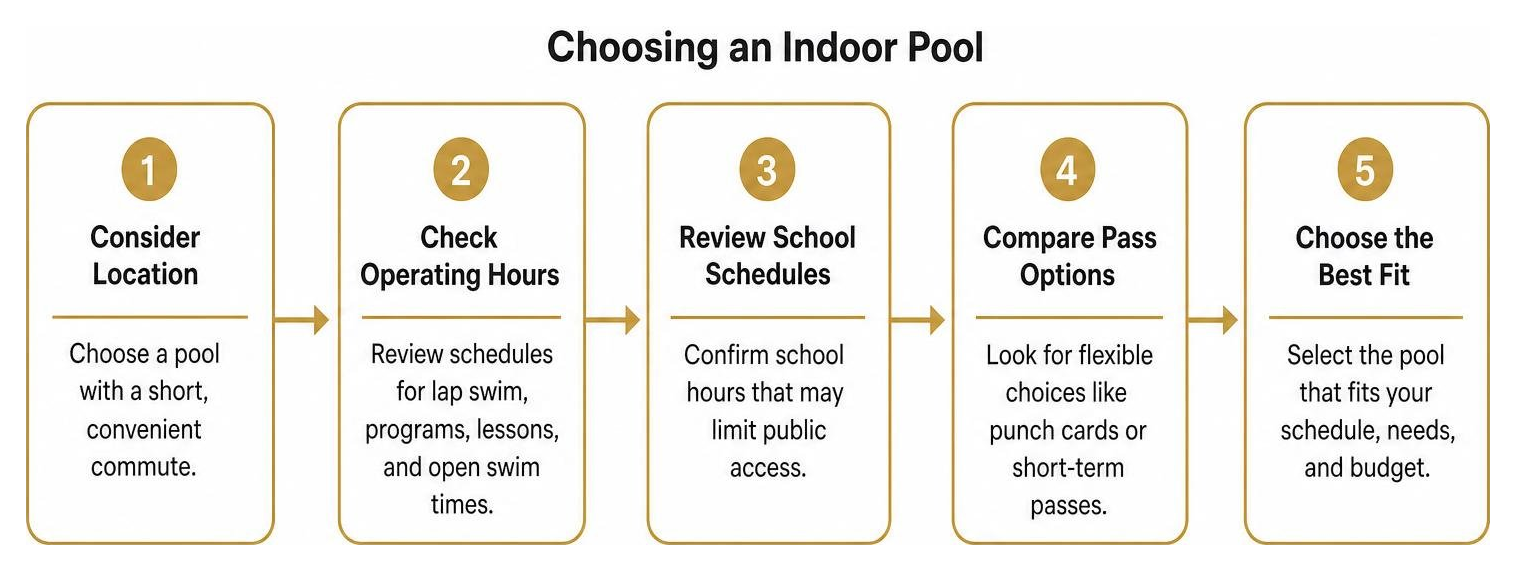
- Location: Selecting a pool within a short commute ensures that swimming remains a consistent habit.
- Operating Hours: Many indoor facilities operate on complex schedules. They may reserve early morning hours for lap swimming, midday hours for school programs, and evenings for swim lessons or water fitness.
- School Schedules: Public pools that share facilities with local schools often close to the general public during school hours.
- Membership Passes and Punch Cards: To find the most flexible option, look for facilities offering multi-visit punch cards or short-term passes (such as 30-day or 90-day options) rather than committing to a full annual contract.
To locate a warm, comfortable swimming environment nearby, swimmers can search for a heated pool near me to view local options.
Locating Public and Private Indoor Pools in Your Area
Finding a place to swim depends on what type of experience is desired.
- Municipal Finders: Local park districts provide excellent public options. Residents can explore Chicago indoor pools to find public facilities managed by local municipal districts.
- Community Centers and Fitness Clubs: Organizations like local athletic clubs frequently house multi-lane indoor pools alongside full-service fitness centers.
- Private Rentals: For those seeking a private swimming experience for family gatherings or personal workouts, platforms allow users to rent indoor pools in Chicago on an hourly basis.
Year-Round Aquatic Programs and Accessibility Features
Modern indoor facilities are built to be highly inclusive, offering specialized programs and physical accommodations for all visitors.
- Swim Lessons: Structured progression programs are available for all ages, from parent-and-tot water adjustment classes to advanced stroke refinement.
- Water Aerobics: Low-impact fitness classes, such as aqua aerobics or aqua yoga, utilize the water’s buoyancy to reduce pressure on joints.
- Adaptive Swim Lessons: Modified swim lessons are designed for individuals with cognitive, developmental, or physical challenges, ensuring a supportive and safe learning environment.
- Accessibility Features: To accommodate individuals with mobility challenges, modern pools feature specialized equipment. This includes chair lifts with secure straps, pool-accessible wheelchairs, and ramp entries.
To learn more about how public facilities accommodate all swimmers, visitors can check the Mt. Scott Indoor Pool accessibility guidelines, or search online to find park district swimming lessons nearby.
Finding Your Ideal Swim Lifestyle in Chicago
For those who want to integrate swimming and wellness directly into their daily lives, choosing a residential community with premium amenities is the ultimate solution.
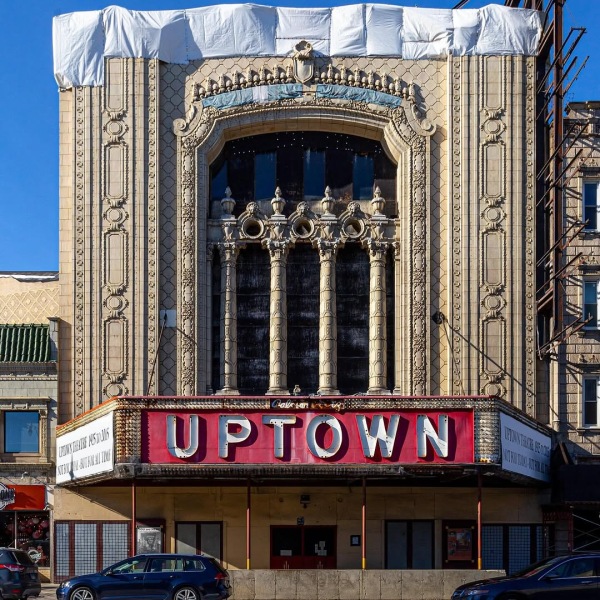
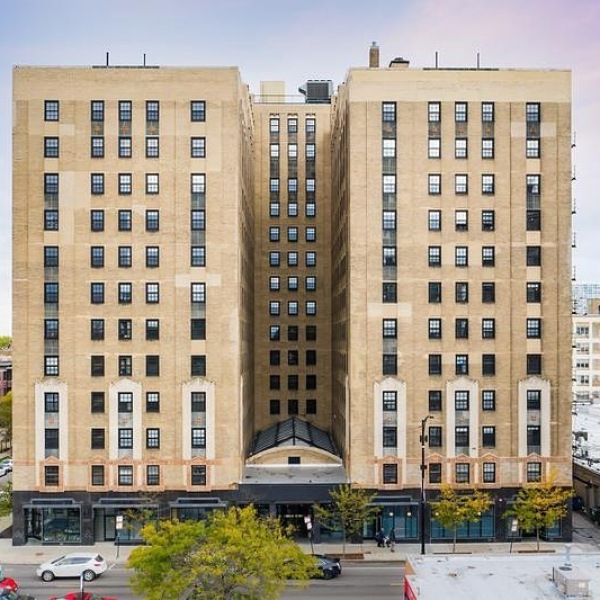
The Lawrence House Apartments by Flats® offers a sophisticated living experience in the vibrant Uptown Chicago neighborhood. This historic building beautifully blends restored architectural features with modern conveniences. Residents enjoy access to a top-tier fitness center, a rooftop lounge with stunning views, and pet-friendly living spaces that accommodate up to two pets.
Living in a community that values wellness makes it easy to maintain an active lifestyle year-round. To discover more about the city's aquatic options, read the comprehensive Chicago Indoor Swimming Pool Guide or browse the curated list to discover the best indoor pools in Chicago to find your perfect match.