

Park District swimming lessons offer a great way for people of all ages to learn vital water safety skills and enjoy aquatic activities. If you're wondering what these programs include, here's a quick overview:
- Age Groups: Lessons typically serve everyone from toddlers (as young as 18 months) to adults.
- Lesson Types: You'll find options like group, private, semi-private, and parent-tot classes.
- Focus: Programs cover water adjustment, basic skills, stroke mechanics, and advanced techniques.
- Progression: Lessons are structured with progressive levels to help swimmers build confidence and ability.
- Community: Programs are widely available in local park facilities across many neighborhoods.
Park districts play a key role in offering community-based aquatic programs. These programs help people develop important water safety skills that can last a lifetime. They also provide opportunities for recreation and fitness for everyone. Whether you are new to swimming or want to improve your strokes, park districts have options for you. They focus on making learning fun and safe for all ages and skill levels.
Understanding Park District Swimming Lessons for All Ages
Swimming is often cited as nature’s perfect exercise. According to research from the CDC on swimming health benefits, regular aquatic activity can improve heart health, decrease stress, and provide a full-body workout that is easy on the joints. Park districts facilitate these benefits by offering a wide spectrum of classes custom to every stage of life.
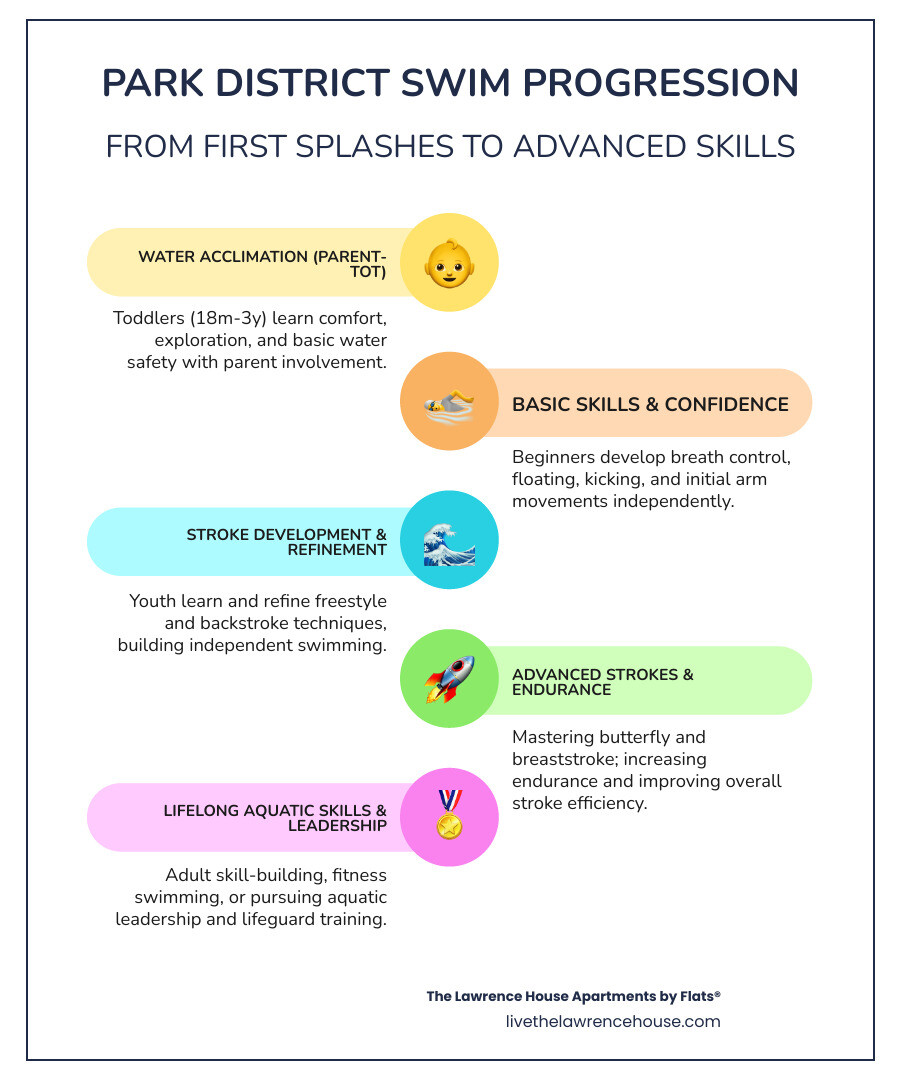
The journey usually begins with parent-tot interaction sessions. These classes, designed for children aged 18 months to 3 years, focus on water adjustment. Rather than teaching a perfect butterfly stroke, the goal is to help toddlers feel comfortable in the water through play and exploration. Parents are in the water with their children, creating a bonding experience while learning basic safety cues.
As children grow, they transition into youth development programs. These are the "bread and butter" of Park District swimming lessons, where participants aged 6 to 17 are grouped by skill rather than just age. For those starting later in life, adult skill-building classes provide a supportive environment for those who may have missed out on lessons as children or simply want to refine their lap-swimming technique.

Specialized Park District Swimming Lessons and Leadership
Beyond the basics, many park districts use recognized curricula such as the Lifesaving Society's Swim for Life program. This ensures that the skills taught are standardized and focused on drowning prevention. For those who find a passion for the water, the path doesn't end at mastering the four basic strokes.
Aquatic leadership programs are a significant part of the park district ecosystem. Junior Lifeguard programs introduce young teens to the fundamentals of water rescue and first aid. Once they reach the appropriate age, participants can enroll in formal Lifeguard Training or swim instructor certification courses. These programs are highly valued by employers, as they develop sound judgment, decision-making, and communication skills. Some districts even offer specialized clubs for Water Polo, providing a competitive team environment for those looking for more than just laps.
Types of Aquatic Instruction and Program Structure
Park districts understand that every learner is different, which is why they offer various instructional formats. Group lessons are the most common and provide a social environment where children can learn by watching their peers. These typically maintain small student-to-instructor ratios to ensure safety and individual attention.
For those who require more focused instruction, private lessons offer one-on-one coaching. Semi-private sessions are also a popular middle ground, often allowing two participants of similar ability—such as siblings or friends—to share an instructor.
The typical structure for these programs involves:
- Duration: Most lessons run for 30 to 45 minutes.
- Session Blocks: Weekday lessons are often organized into 8-session or 10-session blocks, frequently meeting twice a week for a month or every day for two weeks during the summer.
- Saturday Classes: For busy families, Saturday morning classes are a staple, running weekly throughout a seasonal term.
Requesting Accommodations and Instructor Preferences
A hallmark of a quality park district program is its commitment to inclusion. If a participant has a disability or special needs, districts often provide "inclusion swim lessons" which may involve specific documentation or a support worker to ensure the swimmer can participate safely.
When it comes to the staff, instructors are typically certified through recognized bodies like the American Red Cross or the Lifesaving Society. While you can sometimes request a specific instructor—perhaps one your child has worked well with in the past—accommodations are subject to staff availability. Community center leads are usually the best point of contact for these requests. For those who have graduated from lessons and are looking for a place to practice their new skills, there are plenty of resources for More info about lap swimming Chicago.
Skill Progression and Level Placement
To ensure everyone is in the right class, many park districts require swim assessments or evaluations before registration. These are often conducted during public drop-in hours where a certified instructor watches the swimmer perform basic tasks like floating, treading water, or swimming a short distance.
If you are coming from a different program, many districts provide level conversion charts. These help map your previous experience (for example, from a YMCA program) to the specific levels used by the local park district. This prevents students from being bored in a class that is too easy or overwhelmed in one that is too difficult.
Navigating Park District Swimming Lessons Levels
The progression through Park District swimming lessons is designed to be intuitive. While names vary by district, the following levels are common:
- Tiny Tot Levels (I, II, III): These focus on water entry, bubbles, and supported floating. By Level III, children are usually comfortable standing on their own and performing beginning aquatic skills without a parent.
- Jellyfish Level: Often the first "independent" level, focusing on unassisted floating and basic front crawl movements.
- Sea Turtle Level: Introduces rhythmic breathing and more coordinated freestyle and backstroke.
- Penguin Level: Focuses on distance swimming, rotary breathing, and the introduction of the breaststroke.
- Star Fish Level: The "pro" level for youth, where they master all four basic strokes (freestyle, backstroke, butterfly, and breaststroke) and may even begin learning diving and sidestroke.
For those looking for a place to swim year-round, exploring Chicago Park District Indoor Pools can provide a list of local facilities that host these tiered programs.
Registration Process and Facility Policies
Most park districts have moved to online registration systems. These portals allow you to search by age, location, and skill level. It is important to note that registration dates are often staggered, with residents of the district getting priority access before the general public.
Because these programs are popular, they often fill up within minutes of opening. If you miss a spot, always join the waitlist. Districts monitor these lists closely and may open new sections if demand is high enough. You will typically receive an email or phone notification if a spot opens, and you usually have about 24 hours to claim it.
Common policies to keep in mind:
- Cancellations: Requests to cancel a session usually need to be submitted via email to the registration office well in advance.
- Make-up Lessons: Due to tight schedules and safety ratios, many districts do not offer make-up lessons for individual absences. However, if the district cancels a class (e.g., due to a maintenance issue), a make-up date—often on a Friday—is typically provided.
- Late Registration: Most programs do not prorate registration for those who sign up after the session has started.
Facility Amenities and Shared Pool Space
The facilities themselves are often impressive. Many modern park district aquatic centers feature:
- Lap Pools: Dedicated lanes for fitness and advanced instruction.
- Therapy Pools: Warmer water designed for rehabilitation or gentle exercise.
- Leisure Pools: Featuring zero-depth entry (like a beach), which is perfect for toddlers.
- Water Features: Slides, lazy rivers, and spray structures that make the "fun" part of swimming easy to find.
During busy times, pools operate under a shared pool space policy. This means you might see a swim lesson happening in one lane, a water aerobics class in the shallow end, and lap swimmers in the deep end. This efficient use of space ensures the community can access the water in multiple ways simultaneously. To find the best spots for your needs, check out our guide on the Best Indoor Pools Chicago.
Frequently Asked Questions about Park District Swimming
What are the typical requirements for children who are not toilet trained?
Safety and hygiene are top priorities in public pools. Children who are not toilet trained are required to wear a swim diaper. Most park districts go a step further and require that the swim diaper be covered by plastic or rubber pants to ensure a snug fit and prevent any leaks that could lead to a pool closure.
How are participants grouped in the Learn to Swim program?
While registration is often based on an age range (such as 6–17), the first ten minutes of the first lesson usually involve a quick swim test. Instructors will assess each participant’s comfort and skill level, then group them with others of similar ability. This ensures that the instruction is neither too advanced nor too basic for anyone in the group.
What happens if a swim session is cancelled due to unforeseen circumstances?
If a pool must close due to a mechanical failure or weather, the park district will typically notify participants via email or the registration portal. Most districts designate specific "make-up days" (often Fridays) at the end of the session to ensure students receive the full number of scheduled lessons.
Conclusion
Engaging in Park District swimming lessons is more than just a summer activity; it is an investment in community wellness and personal safety. These programs are designed to serve all identities and abilities, ensuring that everyone has a place in the water. From the first splash in a parent-tot class to the rhythmic laps of an adult fitness routine, the park district provides a sustainable path for recreation.
For those living at The Lawrence House Apartments in Uptown, these community resources are just a short trip away, complementing the high-end amenities found at home. Whether you are looking for a place to train for a triathlon or just want your child to be safe at the beach, the local park district is your best resource. To dive deeper into the local aquatic scene, refer to our Chicago Indoor Pool Guide for more information on where to find your next favorite swimming spot.