


Why Basic Boxing Training Is One of the Best Workouts You Can Start Today
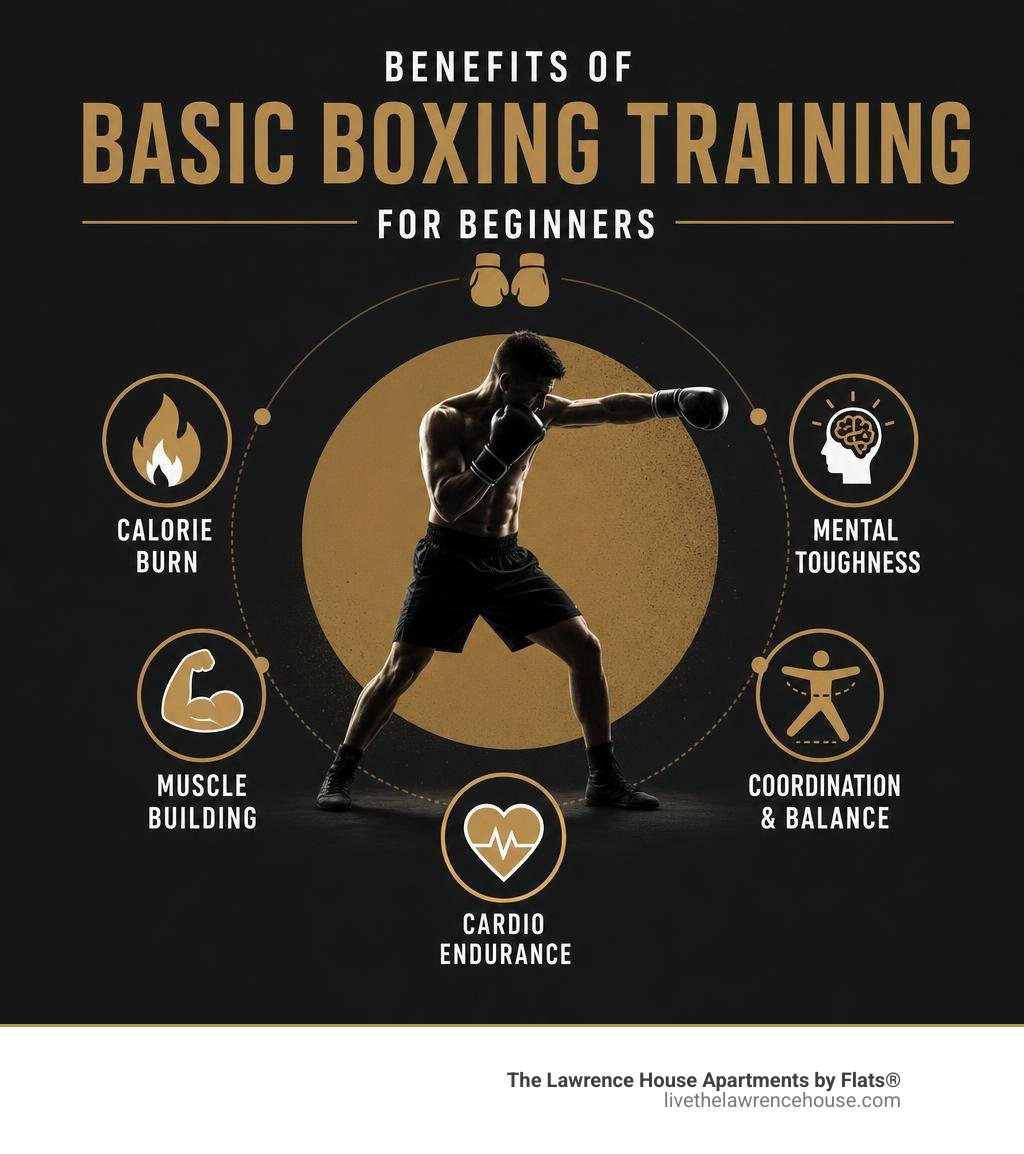
Basic boxing training builds full-body strength, sharpens coordination, and delivers serious cardio — all at once. Whether the goal is fitness, stress relief, or learning to move like a fighter, boxing delivers results fast.
Here's what every beginner needs to know to get started:
- Stance - Stand with feet shoulder-width apart, non-dominant foot forward, knees slightly bent
- Guard - Keep hands at chin height, elbows tucked, chin down
- Core punches - Learn jab, cross, hook, and uppercut in that order
- Defense - Practice slips, rolls, and the high guard from day one
- Footwork - Use a step-drag pattern; never cross your feet
- Conditioning - Train 3-4 sessions per week; mix technique work with cardio
- Equipment - Start with hand wraps and 16oz gloves before anything else
- Sparring - Only introduce sparring after 8+ weeks of solid fundamentals
A single well-structured boxing session can burn between 500 and 1,000 calories while preserving lean muscle. And unlike many workouts, it also builds mental toughness — teaching focus, discipline, and the ability to stay composed under pressure.
The best part? Anyone can start. No prior experience required.
Mastering the Fundamentals of Basic Boxing Training
Often called the "sweet science," boxing is a discipline of millimeters. Success in the ring relies on perfect bodily balance, sharp coordination, and structural alignment. Before throwing a single high-power combination, a beginner must master the foundational mechanics. Prioritizing correct form is the most effective way to prevent common training injuries, such as wrist sprains or shoulder strain, and ensures a highly productive workout.
To build a reliable foundation, beginners should focus on the natural mechanics of balance and movement detailed in Boxing Basics: The Complete Beginner's Guide For 2026. By understanding how the body transfers energy from the ground up, anyone can develop clean, efficient technique.
Essential Stance and Footwork for Basic Boxing Training
The boxing stance is the foundation of all offensive and defensive maneuvers. Without a balanced stance, punches lose power, and defense becomes impossible.
- Orthodox vs. Southpaw: Right-handed individuals typically adopt the Orthodox stance, placing the left foot and left hand forward. Left-handed individuals adopt the Southpaw stance, placing the right foot and right hand forward.
- Weight Distribution: Keep the weight distributed evenly (50/50) between both feet. Keep the knees slightly bent and remain on the balls of the feet to ensure rapid mobility.
- Step-Drag Footwork: To move forward, step with the lead foot first and let the rear foot drag forward to catch up. To move backward, step with the rear foot first and drag the lead foot. To move laterally, always step first with the foot closest to the direction of travel.
A common beginner mistake is crossing the feet or allowing them to come too close together, which immediately ruins balance. Always maintain a shoulder-width distance between the feet.

The Six Core Punches and Defensive Maneuvers
Every offensive sequence in boxing is built from six fundamental punches. Power is generated not from the arms, but through rotation of the feet, hips, and torso.
- The Jab (1): The lead-hand straight punch. It is the most important punch in boxing, used to measure distance, blind opponents, and set up power shots.
- The Cross (2): The straight rear-hand punch. This is a primary power punch, driven by pivoting the back foot and rotating the hips.
- The Lead Hook (3): A circular punch thrown with the front hand, targeting the side of the head or body.
- The Rear Hook (4): A circular power punch thrown with the back hand.
- The Lead Uppercut (5): An upward vertical punch thrown with the lead hand, targeting the chin or solar plexus.
- The Rear Uppercut (6): An upward vertical punch thrown with the rear hand.
Defense is just as important as offense. Beginners must practice proactive head movement, including slips (shifting the head slightly to the left or right to avoid straight punches) and rolls (ducking in a U-shaped motion to escape hooks). Additionally, mastering the high guard—keeping the hands pressed to the cheekbones with elbows tucked tightly against the ribs—is essential for blocking incoming strikes. To practice these techniques with proper guidance, checking out Boxing For Beginners Chicago can help locate structured classes nearby.
Essential Gear for Safe Basic Boxing Training
While shadow boxing requires no gear, hitting bags or training with partners requires protective equipment. Training-injury rates in boxing are approximately 1.7 per 1,000 hours, compared to 1,200 per 1,000 hours in competition, proving that structured, well-equipped training is highly safe.
Using the right gear prevents unnecessary hand and wrist injuries. Hand wraps protect the tiny bones in the hand, while 16oz gloves provide sufficient padding for both heavy bag work and partner drills.
| Equipment | Purpose | Home Use | Gym Use |
|---|---|---|---|
| Hand Wraps | Protects wrist alignment and knuckles | Essential | Essential |
| 16oz Gloves | Cushions impact; builds shoulder endurance | Essential | Essential |
| Mouthguard | Protects teeth and prevents concussions | Optional (unless sparring) | Essential for partner work |
| Jump Rope | Builds footwork speed and cardiovascular stamina | Highly Recommended | Essential |
| Heavy Bag | Develops punching power and impact conditioning | Optional | Highly Recommended |
Structuring Your Weekly Routine, Conditioning, and Progression
Consistency is the ultimate key to progress. A structured weekly routine ensures a steady progression of skill acquisition while allowing the body sufficient time to recover and adapt to the physical demands of training. For a structured roadmap, the Boxing Training Plan for Beginners: 12 Weeks to Your First Spar offers a progressive timeline to build skills safely over several months.
Designing a Balanced Weekly Training Plan
For beginners, training 3 to 4 times per week provides the perfect balance between skill acquisition and recovery.
- Monday: Technique Focus (Stance, footwork drills, and slow shadow boxing)
- Wednesday: Heavy Bag & Pad Work (Practicing basic combinations like the 1-2 or 1-2-3-2)
- Friday: Conditioning & Strength (Jump rope, bodyweight circuits, and core work)
- Saturday: Light Partner Drills (Defensive parries and light touch-drills)
- Tuesday, Thursday, Sunday: Rest and active recovery
It is important to understand the difference between fitness boxing and competitive boxing. Fitness boxing focuses primarily on high-intensity cardio and calorie-burning combinations without contact, while competitive training places heavy emphasis on defense, head movement, ring strategy, and eventual sparring. To find classes that match these specific goals, exploring Boxing Exercise Classes can provide excellent options for local instruction.
Conditioning, Breathing, and Nutrition for Boxers
To sustain the high-intensity demand of boxing, athletes must develop exceptional cardiovascular endurance. Traditional long-distance running is beneficial, but high-intensity interval sprints are far more effective because they simulate the explosive, stop-and-go nature of 3-minute boxing rounds.
Proper breathing is another crucial element of endurance. Many beginners hold their breath when punching, which leads to rapid fatigue. Instead, practice sharp, audible exhalations on every punch. This simple habit tightens the core to protect against body shots while keeping the lungs oxygenated.
Nutrition and hydration support this intense physical output. Consuming 1.6 to 2 grams of protein per kilogram of body weight daily helps preserve lean muscle mass and speed up recovery. Staying hydrated by drinking 2 to 3 liters of water daily keeps muscles functioning optimally and prevents cramping. For historical insights into the athletic preparation of fighters, refer to the classic manual SWEET.
Transitioning Safely to Controlled Sparring
Moving from bag work to sparring should be a gradual, carefully managed process. Ego is the biggest injury risk for beginners in sparring; staying relaxed and focused on technique is paramount.
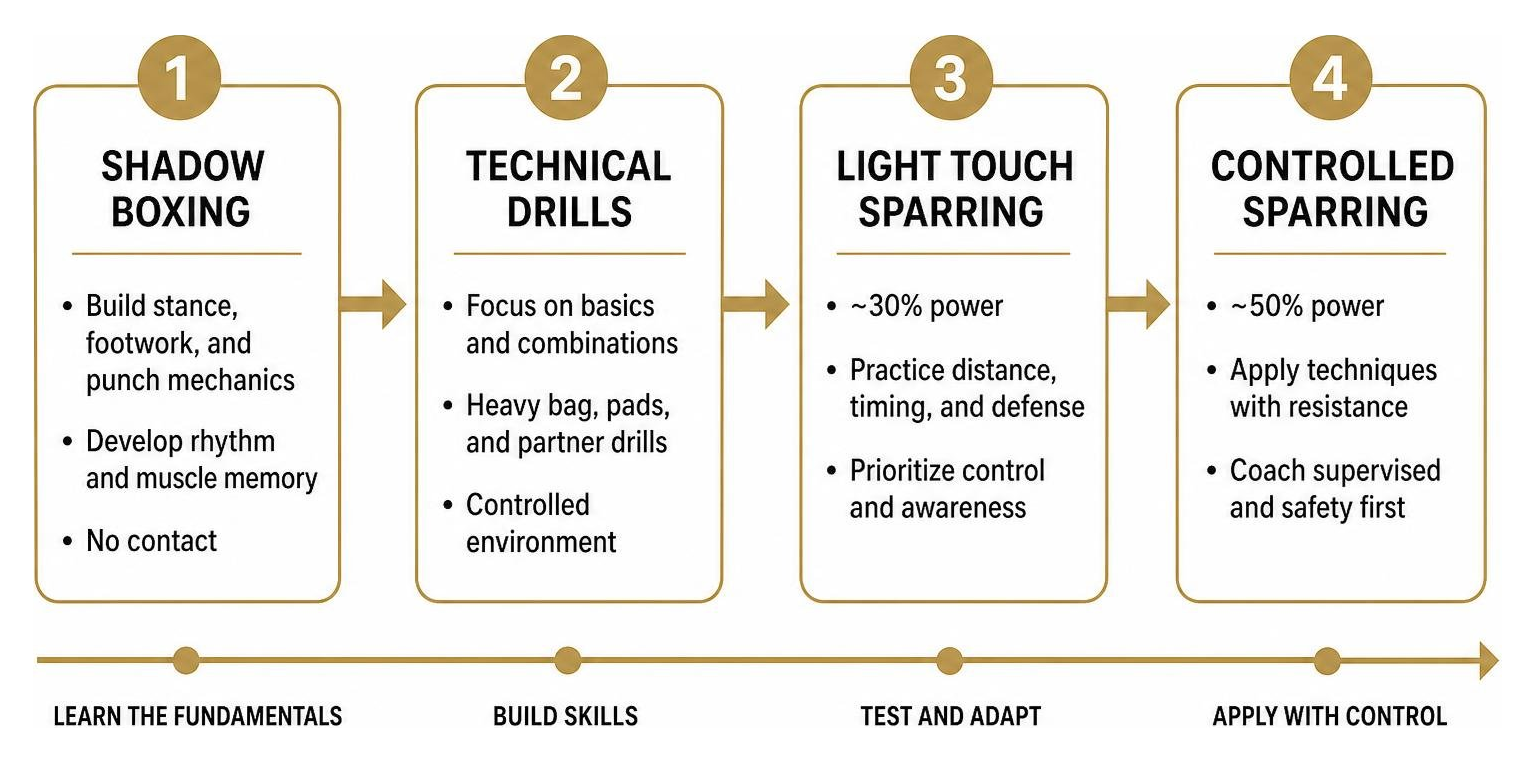
Beginners should start with shadow boxing to build muscle memory, progress to light touch sparring (using only 30% power to practice distance and defense), and eventually move to controlled sparring (50% power with a coach supervising). This step-by-step progression builds genuine confidence and mental calmness under pressure.

For those living in Chicago, finding a premium facility to train is easy. The Lawrence House Apartments by Flats® provides luxury living spaces in Uptown Chicago with high-end fitness facilities, making it simple to stay consistent with conditioning routines. To find local training spaces nearby, check out Boxing Gym Uptown or explore the comprehensive Uptown Gyms Guide to locate the perfect training community to begin a boxing journey.