

Why Hardwood Floors Chicago Homes Feature Are Worth Understanding
Hardwood floors Chicago residents love are found everywhere — from century-old Uptown bungalows to sleek modern high-rises. If you're looking for a quick overview of what makes hardwood flooring work in Chicago, here it is:
Top hardwood flooring options for Chicago homes at a glance:
- Engineered hardwood — Best for Chicago's humidity swings; stable over concrete and radiant heat
- Solid hardwood — Classic choice for above-grade rooms with controlled humidity
- White Oak — Most popular species; durable, versatile, handles foot traffic well
- Hickory — Extremely tough; great for busy spaces
- Maple — Clean, light tone; works well in modern interiors
- Walnut — Rich, dark luxury look
Chicago's climate is tough on floors. Winters are dry and cold. Summers bring humidity. That combination causes wood to expand and contract — which makes choosing the right type of hardwood critical.
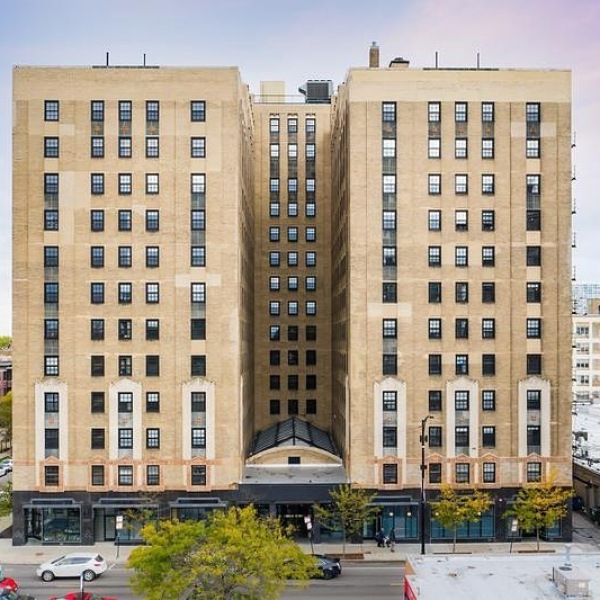
Beyond climate, hardwood floors are a defining feature of Chicago's architectural identity. Many of the city's most beloved historic buildings — including converted schools and classic greystones — still carry their original hardwood floors. That's not just style. It's character that's built to last decades.
Hardwood also has a practical edge over carpet: it doesn't trap dust, pet dander, or allergens, making it a cleaner choice for everyday living.
Choosing the Right Hardwood floors Chicago for the Local Climate
Living in Chicago means experiencing all four seasons, sometimes in a single week. This volatility is the primary challenge for any natural material, especially wood. When we think about Hardwood floors Chicago environments require, we have to look at how wood reacts to moisture.
Wood is hygroscopic, meaning it acts like a sponge. In our humid summers, the boards soak up moisture and expand. In our bone-dry winters, they release that moisture and shrink. If the flooring isn't chosen or installed correctly, this can lead to "cupping" (where the edges of the boards rise) or "gapping" (where spaces appear between the planks).
To ensure a successful installation, following National Wood Flooring Association standards is essential. These standards emphasize the importance of acclimating the wood to the home's environment for several days before the first nail is driven. This is particularly important for Luxury lofts Chicago where large windows and open floor plans can lead to significant temperature fluctuations.
| Feature | Solid Hardwood | Engineered Hardwood |
|---|---|---|
| Composition | Single solid piece of wood | Layers of wood stacked cross-grain |
| Stability | Prone to expansion/contraction | High resistance to humidity changes |
| Installation | Above grade only (not basements) | Any level, including basements |
| Subfloor | Requires plywood/wood | Concrete, plywood, or radiant heat |
| Refinishing | Can be sanded 7-10 times | Can be sanded 1-3 times (layer dependent) |
| Lifespan | 100+ years with care | 25-50 years |
Solid vs. Engineered Hardwood floors Chicago
The debate between solid and engineered hardwood often comes down to where you live. In many Modern apartments Chicago offers, the subfloor is made of concrete. Solid hardwood cannot be nailed directly into concrete; it requires a plywood barrier which adds height and complexity to the project.
Engineered hardwood is the hero of the high-rise. Its cross-grain construction makes it dimensionally stable, meaning it doesn't move nearly as much as solid wood when the humidity shifts. This stability also makes it the only safe choice for homes with radiant heating systems. When choosing engineered wood, pay close attention to the "wear layer" or veneer thickness. A thicker wear layer allows the floor to be refinished in the future, extending its life significantly.
Popular Wood Species and Grades
In Chicago, we see a few species dominating the market because they can handle the "wear and tear" of urban life.
- White Oak: This is the gold standard for Hardwood floors Chicago designers recommend. It is slightly harder than Red Oak and has a more neutral, modern grain. It takes stains beautifully, allowing for anything from a "bleached" coastal look to a deep, dark ebony finish.
- Hickory: If you have pets or a busy household, Hickory is a fantastic choice. It is one of the hardest domestic woods available. Its bold grain patterns are perfect for creating Chicago apartments with character.
- Maple: Known for its light, creamy color and fine grain, Maple is a staple in contemporary design. However, it can be tricky to stain, so it is often left in its natural state with a clear protective coat.
Beyond the species, you must choose a "grade." This isn't about quality, but rather the visual character of the wood:
- Select & Better: Very uniform in color with almost no knots or mineral streaks.
- #1 Common: Shows more natural character, with slight color variations and small knots.
- #2 Common (Rustic): Embraces the "natural" look with prominent knots, wormholes, and dramatic color shifts. This is excellent for hiding scratches and dents in high-traffic areas.
Essential Maintenance for Chicago’s Four Seasons
Maintaining Hardwood floors Chicago homes feature requires a seasonal strategy. You wouldn't wear a parka in July, and you shouldn't treat your floors the same way in January as you do in August.
The Winter Strategy: Salt and Dryness
Winter is the hardest season for Chicago floors. The biggest threat isn't just the cold; it's the salt. Road salt and ice melt are chemically abrasive. If tracked inside, they can eat through the finish of your floor in a single season.
- The Solution: Use high-quality doormats both inside and outside every entrance. A strict "no-shoes" policy during the snowy months is the best gift you can give your hardwood.
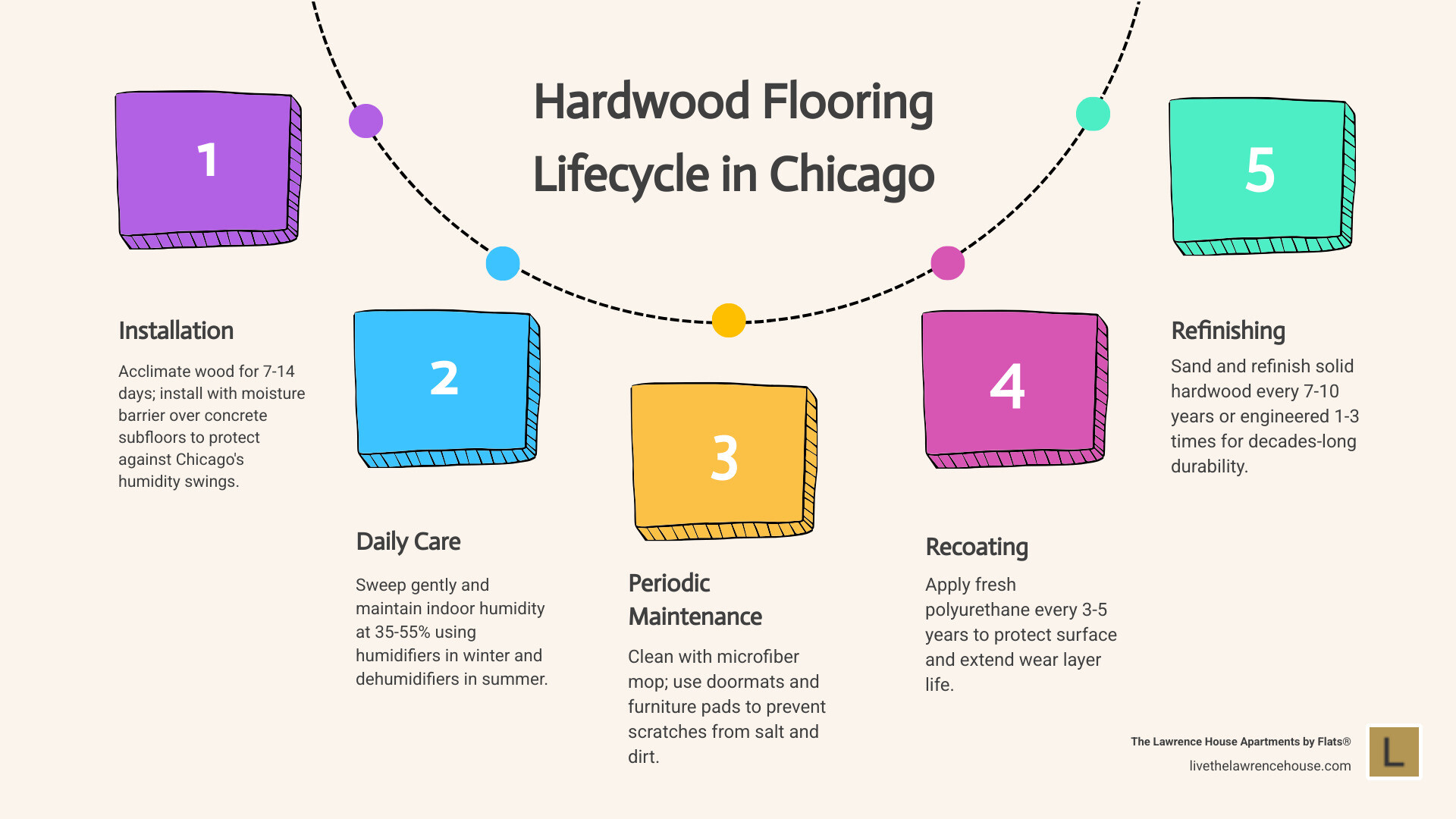
- Humidity: To prevent the wood from shrinking and cracking, use a humidifier to keep your indoor humidity between 35-55%. This range is the "sweet spot" for wood stability and human comfort.
The Summer Strategy: Humidity Control
When the "lake effect" humidity kicks in, your floors will want to grow.
- The Solution: Use air conditioning or a dehumidifier to pull excess moisture out of the air. If you notice your boards starting to "cup" (curving upward at the edges), it’s a sign the humidity is too high.
For more detailed care instructions, we often look to the World Floor Covering Association maintenance tips to ensure the longevity of the materials. Proper care is a vital part of a Contemporary apartment living complete guide.
Protecting Your Hardwood floors Chicago Investment
Your floors are an investment, and like any investment, they require protection.
- Doormat Efficiency: Research shows that doormats can eliminate 80 percent of the dirt tracked into a home. That's 80 percent less sandpaper-like grit scratching your finish.
- Furniture Pads: Never slide furniture across a hardwood floor. Use felt pads on the legs of every chair, table, and sofa. For a DIY touch, some residents even use sliced wine corks as makeshift protective discs under heavy furniture.
- Refinishing Cycles: Most solid hardwood floors should be refinished every 7 to 10 years. This involves sanding down the top layer of wood and applying a fresh coat of polyurethane. This process can make a 25-year-old floor look brand new again.
In Luxury apartments Chicago residents often prefer prefinished boards, which often come with lengthy warranties (some up to 50 years) on the factory-applied finish.
Enhancing Property Value in the Chicago Real Estate Market
Hardwood floors are one of the few home improvements that almost always offer a high return on investment. In the Chicago real estate market, "hardwood throughout" is a major selling point that can significantly increase a home's resale value.
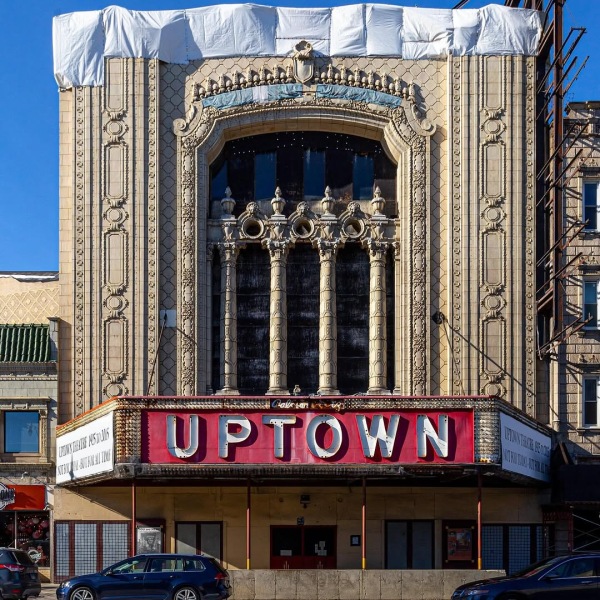
There is a unique beauty in Historic apartments uptown where original floors have been preserved. Many of these buildings feature "hidden" hardwood floors that were covered by carpet in the 1970s. Peeling back that carpet and restoring the original oak or maple underneath is like discovering buried treasure. It preserves the architectural heritage of the city while providing a sustainable flooring option that doesn't need to be replaced every few years like laminate or carpet.
Sustainable sourcing is also becoming a priority for Chicagoans. Look for wood certified by the FSC (Forest Stewardship Council) to ensure your floors aren't just beautiful, but also environmentally responsible.
Frequently Asked Questions about Chicago Hardwood
How often should hardwood floors be refinished?
For most homes, a 7-10 year cycle is standard. However, this depends on foot traffic and how well the floors are maintained. If you notice the finish has worn through and you are seeing bare wood, or if there are deep scratches that a simple cleaning won't fix, it's time for a sand and finish. Engineered floors can typically be refinished 1-3 times, depending on the thickness of the wear layer.
Is engineered hardwood better for Chicago high-rises?
Generally, yes. High-rises often have concrete subfloors and can experience more significant temperature and humidity swings. Engineered hardwood's dimensional stability makes it much less likely to warp or gap in these environments. It also allows for easier "glue-down" installation, which can help with sound transmission between floors—a courtesy your downstairs neighbors will appreciate!
Can hardwood floors handle Chicago winters?
Absolutely, provided you manage the environment. The wood itself is incredibly resilient; it’s the movement caused by dry air that causes issues. By using a humidifier to maintain a consistent 35-55% humidity level and being diligent about removing salt and slush immediately, your hardwood will remain beautiful through the coldest months.
Conclusion
Whether you are walking across the original restored boards of a historic school conversion or the sleek planks of a modern high-rise, Hardwood floors Chicago style are a testament to quality and timeless design. At The Lawrence House, we celebrate this blend of historic charm and modern luxury. From our rooftop lounge to our pet-friendly living spaces, we understand that the right foundation—starting with the very floors you walk on—makes all the difference in creating a home.
If you are looking for a space that captures the true essence of Uptown living with the character only Chicago can provide, we invite you to explore our community.