

Why Boxing for Beginners is the Ultimate Workout
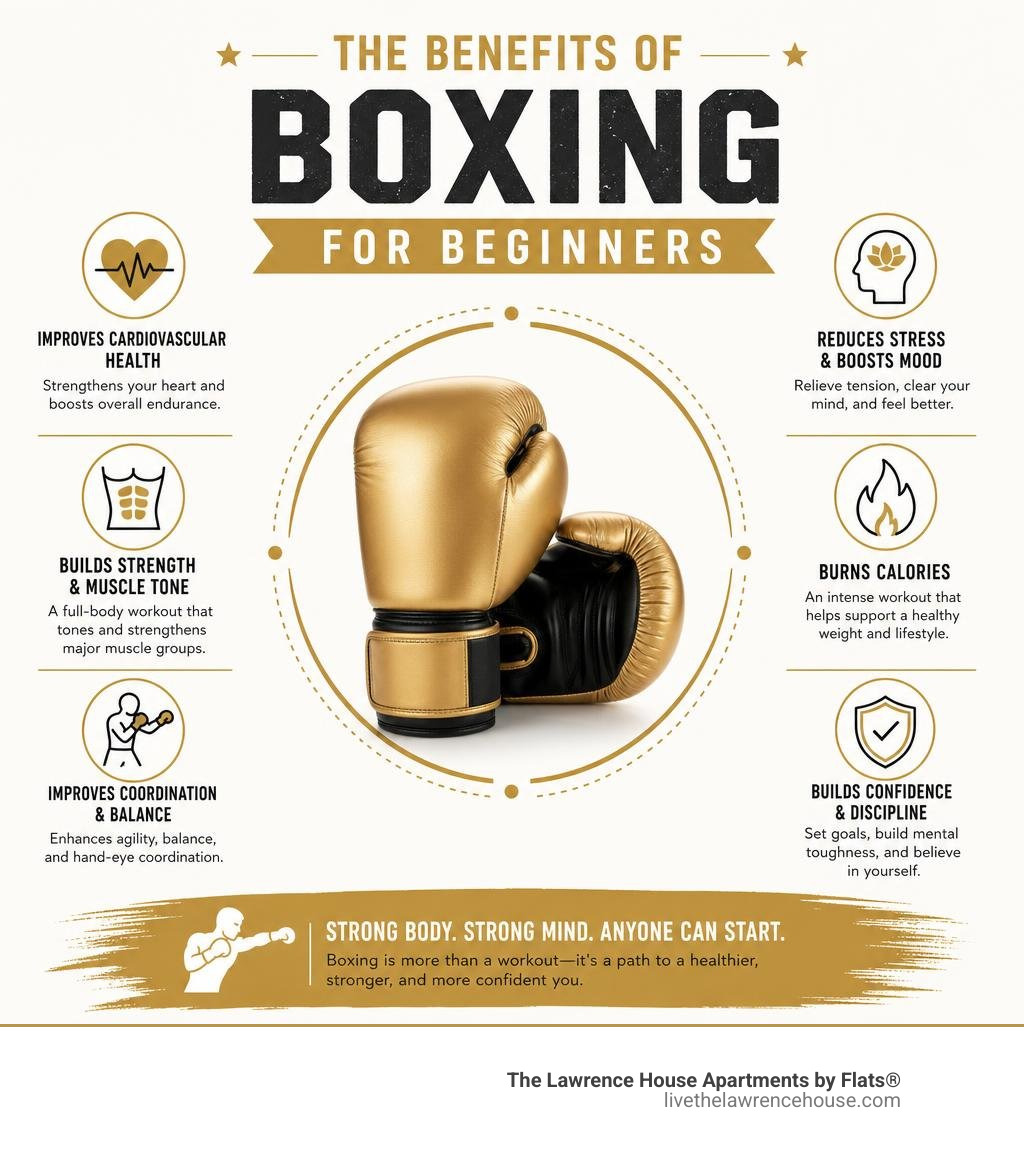
Starting a new fitness journey with boxing for beginners is one of the best ways to build coordination, relieve stress, and get a highly effective full-body workout.
Quick Start Guide: Boxing Basics
- The Guard: Keep your hands up by your cheeks, elbows tucked in, and your chin tucked down.
- The Footwork: Step with the foot closest to the direction you want to move, then slide the other foot to keep your balance. Never cross your feet.
- The Core Punches: Focus on the jab (lead hand) and the cross (rear hand) before moving to hooks and uppercuts.
- The Safety Gear: Always use 180-inch hand wraps and 14oz or 16oz gloves to protect your hands and wrists.
Many people think boxing is only for competitive fighters. That is a mistake.
In July 2026, more people than ever are using boxing as a way to clear their minds after a busy day. It is a mental game. When practicing combinations, you have to focus completely. There is simply no time to think about daily work or stress.
A typical session burns between 500 and 800 calories per hour. It challenges your heart, improves your balance, and builds deep core strength.
Best of all, training is highly safe. Research shows that training injury rates are very low—roughly comparable to casual soccer. With the right technique and basic gear, anyone can start training safely today.
Core Fundamentals of Boxing for Beginners
Before hitting a heavy bag or stepping into a class, learning the core fundamentals of the sport is essential. Attempting to throw heavy punches without a solid foundation can lead to wrist, shoulder, or back strain.
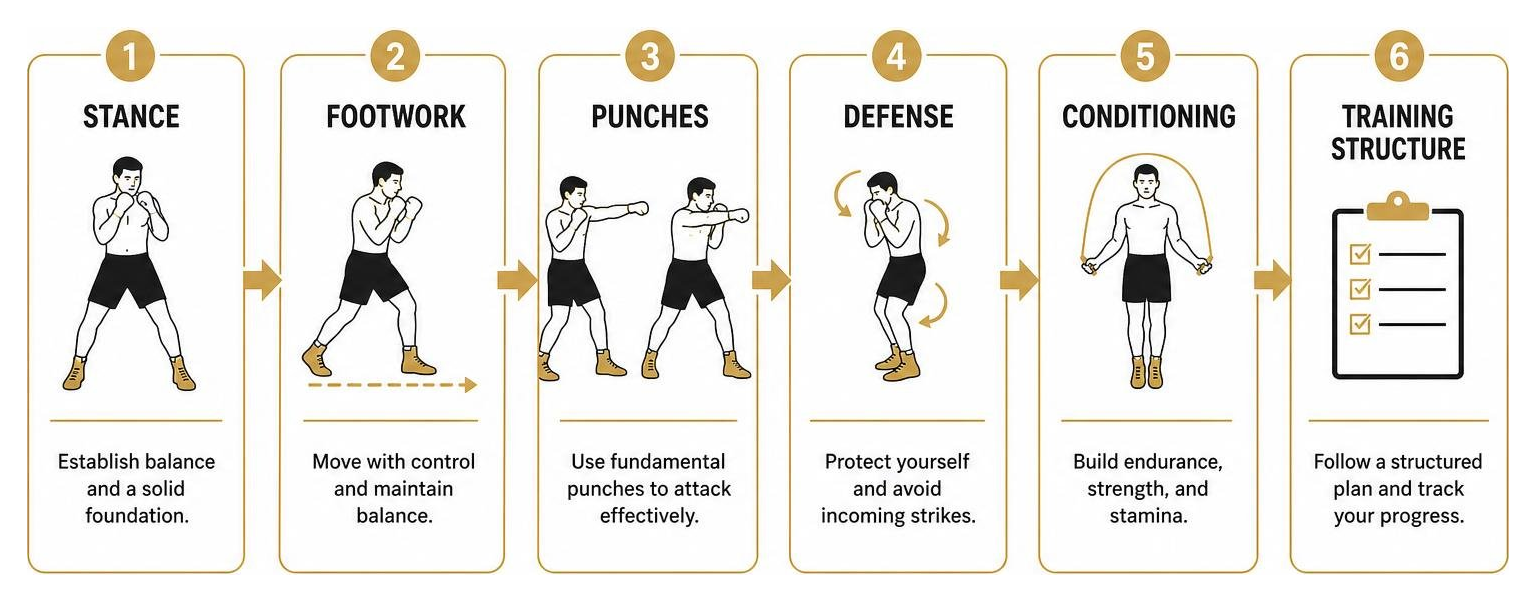
A proper boxing foundation is built sequentially. First comes the stance, which provides balance. Next is footwork, allowing movement while maintaining that balance. Only then do punches and defensive movements come into play, all organized within a structured training session.
The Essential Stance and Footwork for Boxing for Beginners
The stance is the absolute cornerstone of boxing. It supports both offensive power and defensive movement. A proper stance ensures that weight is evenly distributed and the body remains balanced.
- Orthodox Stance (For Right-Handed Boxers): Stand with the left foot and left hand forward. The rear right foot is positioned at a 45-degree angle, slightly wider than shoulder-width apart.
- Southpaw Stance (For Left-Handed Boxers): Stand with the right foot and right hand forward, reversing the orthodox positioning.
- Weight Distribution: Keep the weight centered or slightly on the back leg. The knees should remain slightly bent to maintain mobility. Avoid letting the nose cross the line of the front knee, as this shifts balance too far forward.
- Step-Drag Footwork: To move forward, push off the back foot and slide the front foot forward a few centimeters, then drag the rear foot to return to the starting stance width. To move backward, push off the front foot first. Never cross the feet or let them come completely together, as this leaves a boxer off-balance.
For a deeper look into maintaining balance during movement, explore Boxing For Beginners – The Ultimate Learning Guide.
Mastering Basic Punches and Defense in Boxing for Beginners
Power in a punch does not come from arm strength alone. It travels through a kinetic chain starting from the floor, rotating through the hips and shoulders, and extending out to the knuckles.
- The Jab (1): The longest, fastest, and most important punch. Thrown straight from the lead hand, it controls distance and sets up other punches.
- The Cross (2): A powerful straight punch thrown with the rear hand. It derives its force from the rotation of the back foot and hips.
- The Lead Hook (3): A devastating close-range punch thrown in a horizontal arc with the elbow bent at a 90-degree angle.
- The Rear Uppercut (6) & Lead Uppercut (5): Upward, explosive punches aimed at the chin or body.
- The High Guard: The fundamental defensive position. Keep both gloves pressed to the cheekbones or temples, elbows tucked tightly against the ribs to protect the body.
- Slipping and Rolling: Head movement techniques used to evade incoming straight punches (slipping) or hooks (rolling) without relying solely on blocking.
To study the mechanics of all six fundamental punches, refer to Boxing Basics: The Complete Beginner's Guide For 2026.
Structuring a Beginner Boxing Workout
A structured training session keeps workouts efficient and prevents early fatigue. Standard boxing workouts are built around three-minute rounds to mimic actual bout conditions.
- Warm-Up (10 Minutes): Jump rope, light jogging, and dynamic stretches for the shoulders, hips, and knees.
- Shadowboxing (3 Rounds): Practicing stances, footwork, and punch combinations in front of a mirror to self-correct form.
- Heavy Bag Work (3 to 5 Rounds): Applying punches to a target, focusing on clean technique, rotation, and maintaining distance rather than raw power.
- Conditioning (15 to 20 Minutes): Bodyweight exercises like push-ups, squats, and core training to build endurance.
- Cool Down (5 to 10 Minutes): Static stretching to aid muscle recovery.
For those ready to establish a consistent routine, implementing a structured Basic Boxing Training plan is highly recommended. To map out your progress over a longer period, check out the Boxing Training Plan for Beginners: 12 Weeks… | Titans Grip.
Essential Equipment and Safety Guidelines
Using the right equipment is non-negotiable for hand safety and injury prevention.
- Hand Wraps: Always wrap the hands using 180-inch semi-elastic (Mexican-style) wraps. These protect the tiny bones in the hands and secure the wrists.
- Boxing Gloves: Beginners should use 14oz or 16oz gloves. Heavier gloves provide extra padding to protect the knuckles and build shoulder endurance.
- Mouthguard: A custom-molded mouthguard is essential for protecting the teeth and jaw during any partner drills.
- Footwear: Wear flat-soled shoes, such as boxing shoes or flat sneakers. Avoid running shoes with thick, cushioned heels, as they hinder the ability to pivot and can cause ankle rolls.
To learn more about group training environments, read about Boxing Exercise Classes. For a complete gear checklist, see How to Start Boxing: Step-by-Step Guide for First-Time Boxer.
Transitioning to Sparring and Avoiding Common Mistakes
Sparring should only be introduced after several weeks of technical preparation. Most coaches recommend waiting at least two to three months before engaging in controlled sparring.
- Touch Sparring: Start with restricted drills using only 30% power. For example, one partner practices throwing jabs while the other focuses entirely on blocking.
- Ego Management: The goal of sparring is to learn, not to win. Keep punches light and controlled.
- Avoid Dropping the Hands: A common mistake is dropping the rear hand when throwing a jab. Keep the non-punching hand glued to the cheekbone.
- Avoid Flat-Footedness: Staying flat-footed reduces mobility. Keep the heels slightly off the ground to remain light on the feet.
To explore training options and coaching in the local area, check out Boxing For Beginners Chicago.
Starting Your Boxing Journey in Uptown Chicago
Finding the right environment to train makes a significant difference in skill development and consistency. For those living in Uptown Chicago, having access to premium fitness facilities simplifies the process of staying active.

The Lawrence House Apartments by Flats® features a fully equipped fitness center, making it easy to practice shadowboxing, complete conditioning circuits, or work on footwork drills. To find the best training spots in the neighborhood, consult the Ultimate Gyms Guide Uptown to plan your fitness routine.